Back
TechnicalMotorcycle

Motorcycle valve adjustment: clearance and intervals

M
Max
5 minFebruary 3, 2026
Motorcycle valve adjustment: clearance and intervals

Why valve clearance is critical

Valves open and close thousands of times per minute. When hot, metals expand. Valve clearance is the gap left between the cam and the valve (or bucket) to compensate for this expansion.

  • Too much clearance: the valve opens less, the engine loses efficiency, you hear a ticking noise when cold
  • Not enough clearance: the valve doesn't fully close when hot, combustion gases leak, the valve overheats and risks burning

Poorly adjusted clearance means an engine that loses power, uses more fuel, and wears prematurely.

Two adjustment systems

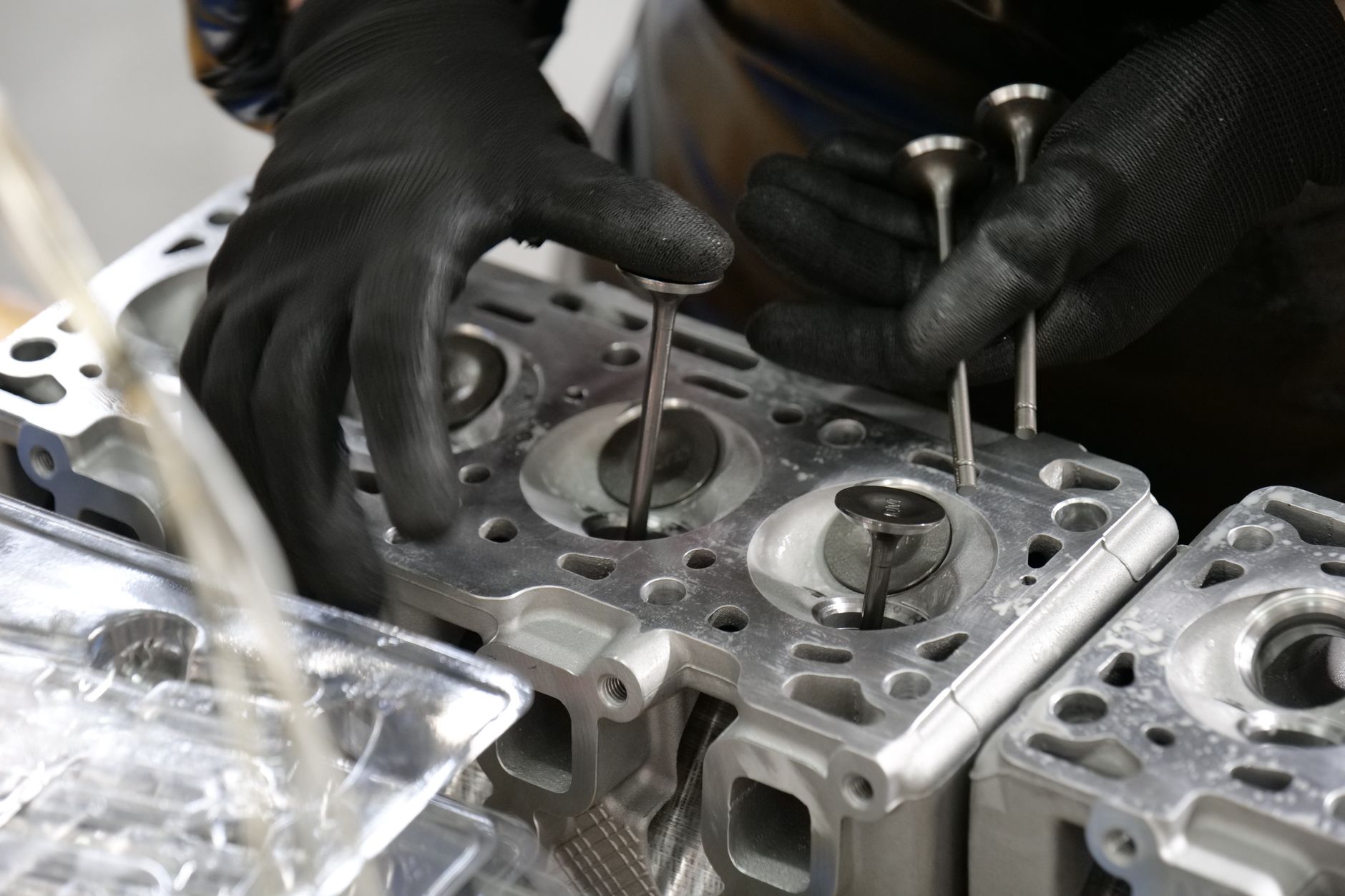
Shim system (shim-over-bucket / shim-under-bucket):

  • Used on most modern Japanese motorcycles (Yamaha, Honda, Kawasaki, Suzuki)
  • Calibrated shims are placed on or under the buckets
  • To change the clearance, you measure the current gap, calculate the required shim, and swap it
  • Advantage: stable over time, no loosening
  • Disadvantage: requires camshaft removal to access shims (on shim-over-bucket systems)

Screw adjuster system:

  • Used on some singles, V-twins (Ducati, some Honda), classic bikes
  • A rocker arm with an adjusting screw and lock nut
  • To change the clearance, loosen the lock nut, turn the screw, re-tighten
  • Advantage: quick adjustment without heavy disassembly
  • Disadvantage: can loosen over time

Typical clearance values

Values vary by model, but typical ranges are:

  • Intake: 0.10-0.20 mm
  • Exhaust: 0.20-0.30 mm
Exhaust clearance is always larger than intake, because exhaust valves run hotter (in direct contact with burnt gases).

These values are indicative. Every engine has its own specifications — an MT-07 doesn't have the same clearances as a CB500F. Always check the workshop manual.

Try the AI mechanic on your machine

Your exact answer in 10 seconds

Give us your model. We cross-check workshop manuals and answer, sourced.

The procedure: golden rules

1. Engine cold: always check clearances at ambient temperature. If you've just been riding, wait at least 3-4 hours.

2. Find TDC (Top Dead Centre): measurement is done at TDC on the compression stroke for the relevant cylinder — meaning both valves (intake and exhaust) are closed. On the crankshaft, a "T" mark or line aligns with a fixed reference on the casing.

3. Measure with feeler gauges: slide the gauge between the cam and the bucket (or between the rocker and valve stem). The gauge matching the clearance should pass with slight resistance — neither free nor forced.

4. Record all values: measure each valve and note them on a diagram. Compare with specifications.

5. Correct if needed:

  • Shim system: calculate the new thickness (current shim + measured gap - target gap)
  • Screw system: loosen lock nut, adjust screw, re-tighten while holding the screw

Inspection intervals

  • First check: often at 1,000 km (break-in)
  • Then: every 12,000 to 26,000 km depending on model
  • Some modern bikes with shim systems go 40,000 km without needing correction

The tooling investment

  • Feeler gauge set (0.02 to 1.00 mm): 10-20 EUR
  • Shim set (if shim system): 50-100 EUR for a complete set
  • Model-specific tools (bucket compressor tool, etc.)

This is a job that often intimidates beginners, but with the right documentation and a methodical approach, it's entirely accessible.

Try L'Atelier free for 10 days — no credit card required.

Try the AI mechanic on your machine

Your exact answer in 10 seconds

Give us your model. We cross-check workshop manuals and answer, sourced.