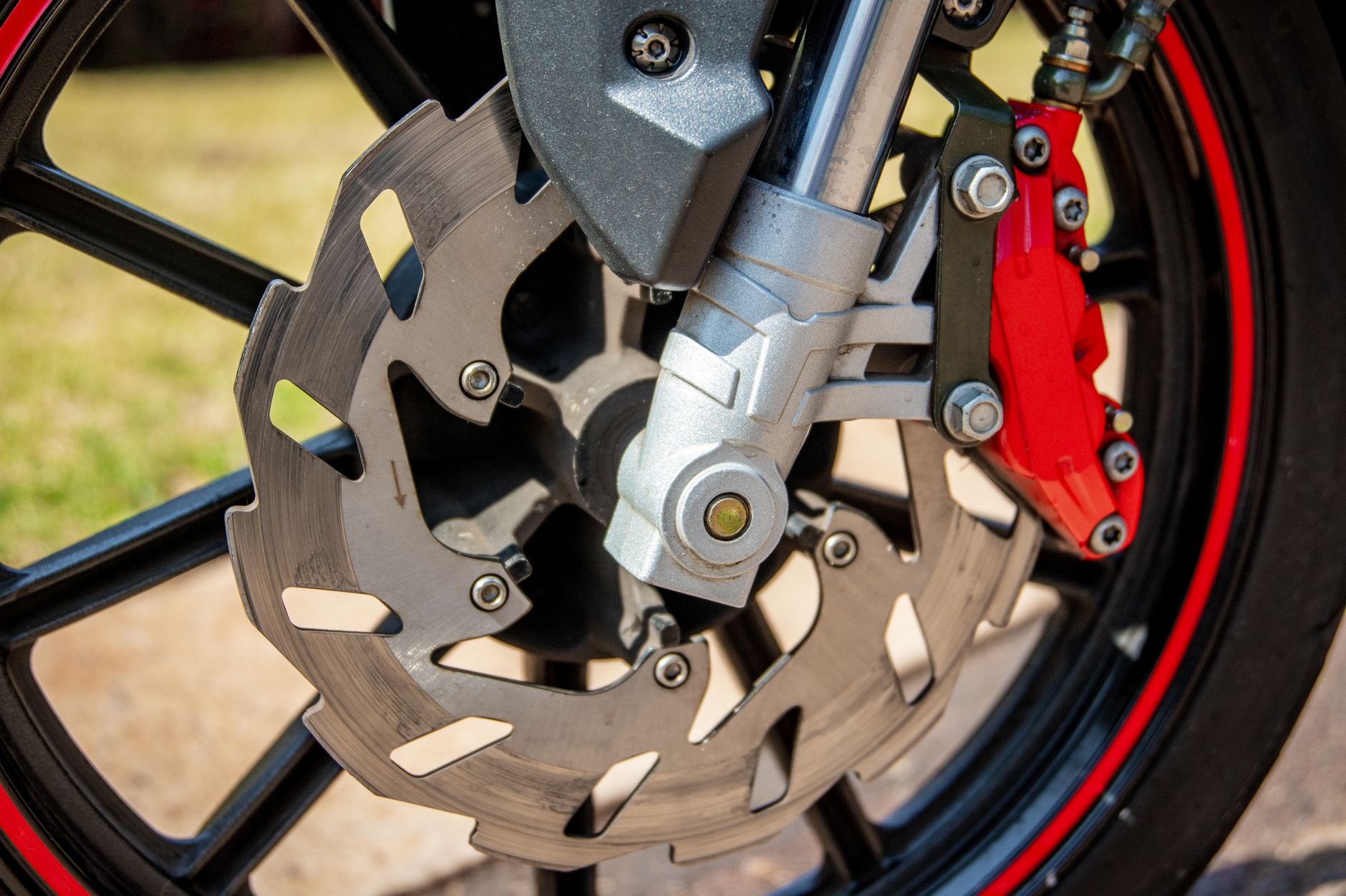
Brake fluid is hygroscopic — it absorbs moisture from the air over time. This water in the system lowers the fluid's boiling point. Result: during hard braking, the fluid can boil, create vapour bubbles, and you lose braking power.
Bleeding replaces old fluid with fresh, and removes all air bubbles from the circuit.
Which fluid to use?
DOT4: the standard on most motorcycles. Dry boiling point: 230 °C.
DOT5.1: DOT4-compatible, higher boiling point (260 °C). Ideal for track use.
Not DOT5 (silicone) — incompatible with standard DOT4 systems.
Always check the specification on the master cylinder cap. Never mix DOT4 and DOT5.
Two methods: gravity vs syringe (push)
Gravity method (classic):
1. Fill the master cylinder reservoir
2. Open the bleed valve on the calliper
3. Fluid flows down by gravity, bubbles rise up
4. Slow but effective if you're patient
Syringe method (push) — recommended:
1. Fill a syringe with fresh fluid
2. Connect it to the calliper's bleed valve (via tubing)
3. Push the fluid upward, from bottom to master cylinder
4. Bubbles naturally rise to the outlet (reservoir on top)
The syringe method is faster and more reliable. Bubbles don't have to travel downward against their nature.
The detailed procedure (syringe method)
Protect the paintwork — brake fluid attacks lacquer. Place a cloth over the reservoir and frame
Open the master cylinder reservoir cap
Prepare the syringe: fill it with fresh fluid, eliminate bubbles in the syringe
Connect the tubing to the calliper bleed valve
Open the bleed valve a quarter turn (8 or 10 mm wrench)
Push slowly with the syringe. You'll see old fluid (dark) rising into the reservoir
Continue until clear fluid appears in the reservoir
Close the bleed valve — torque: 7-10 Nm. Don't force it, the threads are fragile
Top up the level in the reservoir to the MAX mark
Test the lever: it should feel firm from the first few millimetres of travel. If it's spongy, air remains — start over
Special case: bikes with ABS
On an ABS-equipped motorcycle, the circuit passes through an ABS modulator before reaching the callipers. The absolute rule:
Never introduce air into the ABS modulator. Bleeding the modulator often requires a manufacturer diagnostic tool. Only bleed by pushing from bottom (calliper) to top (master cylinder), never the reverse.
If you have any doubt about the ABS procedure for your model, consult the workshop manual.
Frequency
Replace brake fluid every 2 years, regardless of mileage. Moisture absorption happens even when the bike isn't ridden.
Try L'Atelier free for 10 days — no credit card required.
On utilise des cookies essentiels au fonctionnement. Avec ton accord, on ajoute la mesure d'audience et l'attribution de nos liens/sondages partenaires (ça finance le service). En savoir plus