For the buyer, the best moment to sign is the one when nobody wants to buy: we set out why in buying in winter, the best window. For the seller it is exactly the opposite, and the consequence isn't simply "advertise in spring". It is that the window where demand outstrips supply is short, that it doesn't arrive on a fixed date, and that you cannot catch it by improvising.
The seller who takes a photo in his garage one Sunday in May and posts it straight away arrives after the wave, with a dirty machine, a doubtful battery and a price plucked out of the air. The one who sells well started six weeks earlier, without spending more time on it in total. The difference comes down to a countdown and two decisions: what you repair, and what you accept will come off the price.
A countdown, not a calendar
The demand peak doesn't fall on a date. It is triggered by the first genuinely mild weekend, the one where people pull the machine out of the garage and decide they are finally going to change it. Some years that's early March, others late April. You cannot predict that date, but you can be ready before it: hence working backwards.
| Milestone | What you do | Why it sits there |
|---|---|---|
| D-45 | Honest assessment, list of faults, prices for the parts | Parts lead times are what makes everything else slip |
| D-30 | Repairs and service | An invoice dated three or four weeks before the ad is credible; dated the day before, it smells of a sale |
| D-21 | Paperwork gathered: V5C, service book, invoices, spare keys, handbook | The thing everyone forgets, and the one that stalls a deal on the day |
| D-14 | Deep clean, then photographs | Cleaning and photography happen the same day, in good light |
| D-7 | Price set after checking comparable ads, text written | The price is decided by looking at today's market, not at your memories |
| D-0 | Publication, preferably towards the end of the week | Ad browsing concentrates on evenings and weekends |
| D+21 | Review point | Three weeks with no serious contact is a signal, not bad luck |
Six weeks is not six weeks of work: half a day of assessment, a day in the workshop, two hours of cleaning and photographs, an hour of writing. The rest is lead time. One thing worth slotting into the D-30 stage on a motorcycle: if the MOT — annual once the bike is three years old — falls due within the next few months, put it through before you advertise. A fresh certificate removes a negotiating lever and reassures a buyer who has no way of judging the machine himself.
Why the window is shorter than you think
Seasonality doesn't have the same shape depending on what you are selling, and that changes when you need to be ready.
- Motorcycles and scooters: demand climbs with the first good weekends and stays strong into early summer, then drops away during the holidays. A second, narrower window exists in early autumn.
- Bicycles and e-bikes: it rises from the first long days, peaks sharply in spring, and slumps in July and August because the buyers have gone away. Selling a bike in August costs you 5 to 10 % for nothing.
- Garden machinery: the season follows the use, not the weather. Mower, strimmer and hedge trimmer in spring; chainsaw, log splitter and blower in autumn. Advertising a chainsaw in April is condemning yourself to haggling.
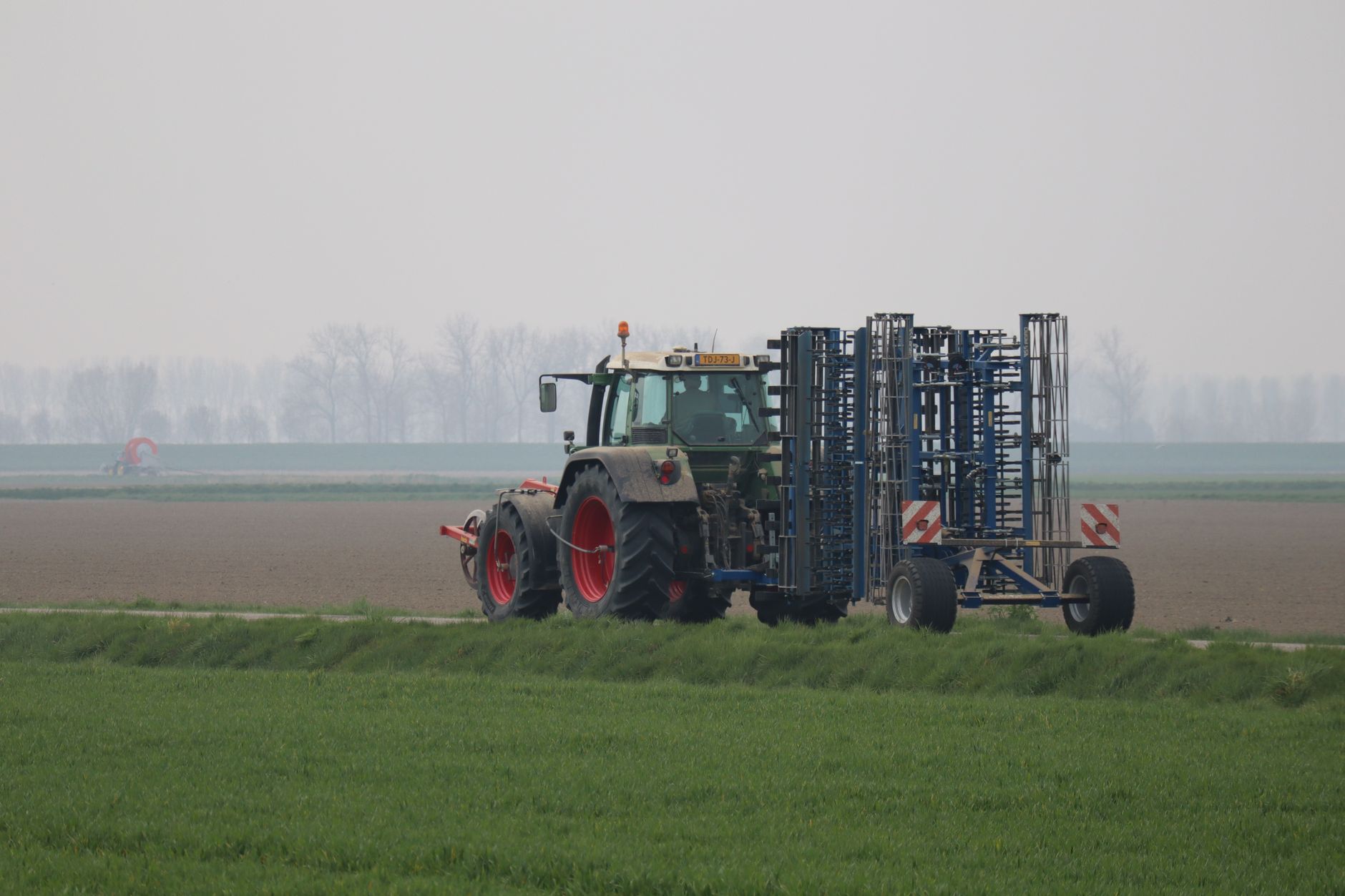
- Tractors and compact machinery: less seasonal, driven by the work in hand and by cash flow. The countdown still helps, the urgency of the date rather less.
What to fix first: the 10 % rule
The question isn't "is it broken", it is "does the pound spent come back in the agreed price". The rule of thumb that works: fix whatever shows, can be tested in thirty seconds, and costs less than 10 % of the asking price. Leave whatever exceeds 20 % to be deducted.
| Item | Indicative cost | Effect on the sale | Verdict |
|---|---|---|---|
| Weak battery | £50 to £130 | A machine that won't start on the viewing doesn't sell | Do it, no argument |
| Brake pads | £25 to £80 | Checked in three seconds, a classic haggling lever | Do it |
| Oil and filters | £50 to £100 doing it yourself | Recent invoice, coherent history | Do it |
| Complete chain kit, motorcycle | £100 to £220 | Visible at first glance, heavily haggled over | Do it if the kit is near the end |
| Complete drivetrain, bicycle | £80 to £190 | Same, and it can be measured with a gauge | Do it |
| Tyres near the limit | £130 to £400 fitted | The buyer usually deducts more than the real cost | Do it if they are genuinely at the limit |
| Scratched body panel | £130 to £520 | Rarely recovered on resale | Leave it, deduct |
| Major service due | £350 to £1,050 | Partially recovered at best | Leave it, deduct, but declare it |
| Tired e-bike pack | £400 to £800 | Never recovered in a private sale | Leave it, deduct honestly |
The item-by-item detail is developed in preparing your motorcycle before selling, and the logic transfers to bicycles unchanged.
What you leave to be deducted, and how to say it
Declaring an expensive fault feels frightening, so people hide it, and it comes out on the test ride. The buyer feels misled and haggles twice the real amount, when he doesn't simply walk. Declared up front, costed, with a quote to back it up, the same fault becomes a plain component of the price.
The wording that works has three parts: the fact, the amount, the consequence. "The valve clearance check is due, £420 workshop quote, the price reflects that." You defuse the heaviest piece of haggling before it starts, and you prove you know your machine. For an e-bike pack, give the measured remaining capacity rather than an adjective: a figure can be discussed, "battery still good" gets refused.