Putting the workshop to bed for winter: damp, corrosion, fuel
M
Max
|7 minDecember 1, 2026
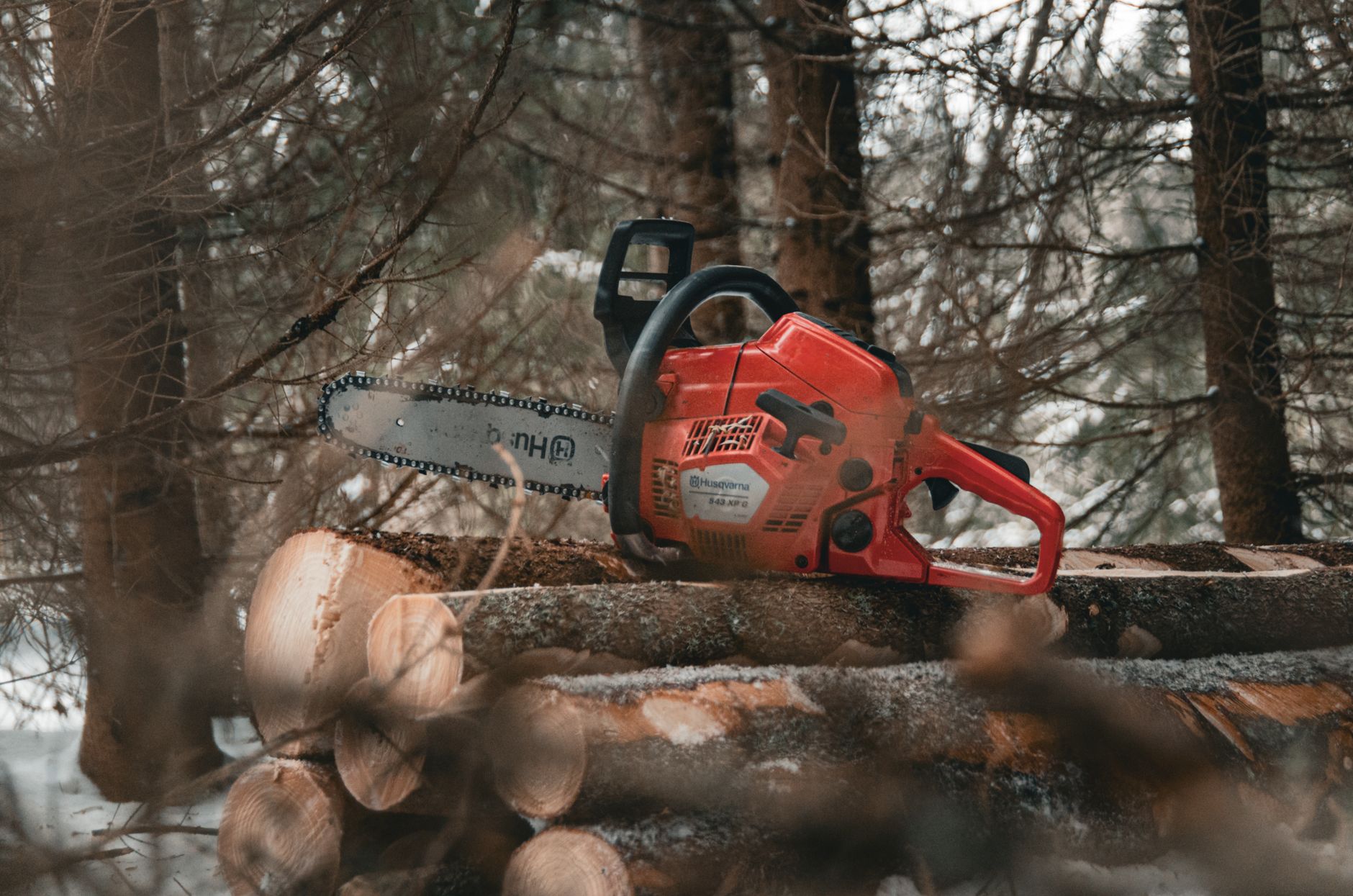
You put everything away in November, clean and oiled, and in March you find an orange bloom on the vice jaws, a pitted pillar drill table, a chainsaw that will not start and a dead driver pack. Nothing fell over, nothing leaked: the workshop simply spent four months in conditions that work against it, with nobody looking.
The good news is that it all comes down to three mechanisms — condensation, surface oxidation and fuel degradation — and that they are dealt with using a £12 hygrometer, a few rags and two or three storage decisions. Here is what actually happens in an unheated garage, and the order in which to tackle it.
Dew point, the only idea you need
Air holds a limited amount of water, and that limit depends on its temperature. The dew point is the temperature at which that air becomes saturated: anything colder than that figure gets covered in liquid water. Air at 10 °C and 80 % relative humidity has a dew point of around 7 °C. A cast iron vice at 4 °C, in that air, runs wet.
Hence the counter-intuitive observation that everyone with an uninsulated garage makes: it rusts less in January than on the first mild spell in February. During a cold snap the outside air is dry in absolute terms and everything is at the same temperature. When a mild, damp wind arrives, the air warms up within hours while the concrete slab and the metal masses are still at 3 or 4 °C. They drop below the dew point, and the whole workshop sweats at once.
Situation
What happens
Corrosion risk
Relative humidity below 50 %
Electrochemical reaction almost stopped
Negligible
50 to 60 %
Slow corrosion on bare steel
Low
Above 70 % continuously
Permanent molecular water film
High
Visible condensation (mild spell)
Liquid water on every cold mass
Very high
The aim is therefore not to "heat", it is to stay below 55 to 60 % relative humidity and to avoid sudden swings. Heating in bursts, two hours on a Saturday, is worse than doing nothing: it warms the air without warming the masses.
Ventilate or seal up? The hygrometer decides
The instinct to seal everything is often counter-productive. In winter, cold outside air holds very little water in absolute terms: letting it in, then letting it warm slightly indoors, makes the relative humidity fall. Ventilating in cold, dry weather therefore dries the workshop out.
In cold, dry weather: open up wide for twenty minutes, twice a week.
In a damp mild spell, fog or drizzle: shut everything. Letting that air in amounts to watering your tools.
A £12 hygrometer placed at bench height settles the question in a second, and saves you guessing.
Two openings beat one, one low and one high, to create a sweep rather than a swirl.
Dehumidifying: what actually works
Not all appliances are equal, and the cold changes everything:
Salt absorber (calcium chloride): £10 to £18 plus refills, it captures a few hundred grams of water a month. Perfectly suited to a cabinet or a closed roll cab, derisory for a 25 m² garage.
Compressor dehumidifier: effective above roughly 15 °C, its output collapses in the cold because the evaporator ices up. Reckon on £130 to £250. A poor choice for an unheated space.
Desiccant dehumidifier (rotor type): works from 1 to 5 °C, uses more power — often 300 to 600 W — but it is the only type genuinely relevant in a cold garage. £170 to £350.
A plastic sheet laid on the floor under machines and vehicles costs £18 and blocks the moisture rising from an uninsulated concrete slab, which can release several litres a day. It is the best effect-per-pound item on the list.
Gentle, permanent heating of 50 to 100 W inside a closed cabinet or under a cover keeps that space above the dew point locally, for a few pounds of electricity a month.
What rusts first
Always in the same order, and it is never what you instinctively protect:
Unpainted machined surfaces: vice jaws, drill or saw tables, surface plates, parallels, calipers, machine bases. No protection, low roughness, direct condensation.
Fingerprints. Sweat contains salt and fatty acids: a print left on a chrome spanner becomes a visible pit within three months. It is the number one cause of pitted tools.
High-speed steel and cutting edges: drills, taps, reamers, plane irons, chainsaw chains. Thin section, big relative damage.
Springs and small fasteners stored loose in a metal tin that acts as a condensation collector.
The inside of things: tanks, compressor receivers, casings. We protect the outside and forget that condensation happens in there too.
Protecting steel: the scale
The rule that comes before everything else: never put a tool away damp, and wipe things down as a matter of course before closing a drawer. Only then comes the product.
Protection
Life in an unheated space
Drawback
Multi-purpose penetrating spray
A few weeks
It is not a protective coating, it evaporates
Light machine oil
3 to 6 months
Greasy, attracts dust
Microcrystalline wax as a dry film
6 to 12 months
Has to come off with solvent before machining
Grease
Over 12 months
Messy, keep it for long-term storage
VCI bag or paper
6 to 24 months in a closed container
Useless in open air
Paint or surface treatment
Durable
Impossible on bearing surfaces and cutting edges
Two details that change the outcome: store tools on foam or on wood rather than on bare metal, and favour a closed container — roll cab, case, cabinet — over a wall board. A closed volume can be treated, a wall cannot. For cutting tools and gauges, a VCI bag in the drawer costs £2 to £5 and works all winter without you thinking about it.
Fuel: what degrades, and how fast
Petrol is the item that costs the most in spring repairs, because the degradation is invisible right up to the failed start.
Standard E10 unleaded: ethanol is hygroscopic, it draws moisture out of the air. Reckon on 3 to 6 months in a well-sealed jerry can, less in a half-empty tank that breathes. E5 super, with less ethanol, keeps a little better, which is why it is the usual recommendation for older or two-stroke engines.
Two-stroke mix already made up: 1 to 2 months. The oil separates, and the diaphragm carburettor jets on small tools are the first to clog. Never mix more than you are going to use.
Alkylate fuel in a ready-to-use can: 3 to 5 years of stability, ethanol-free. It is expensive per litre, but a chainsaw or brushcutter carburettor costs more than a can.
Stabiliser: it slows oxidation, it repairs nothing. Add it to fresh fuel, then run the machine for two to three minutes so the treated fuel reaches the carburettor — otherwise you have protected the tank and left the rest with nothing.
On the choice between draining and filling, the rule depends on the machine: small tools with a diaphragm carburettor, drain and run dry; the metal tank of a motorcycle or a tractor, fill to the brim to remove the air space and the condensation. The detailed method is in storing two-stroke petrol without degradation and, for machines with a large tank, in fuel stabiliser before laying up.
On storage: approved cans, full rather than half empty, out of the sun, outside the house, and never near a boiler, a water heater or any pilot light. How much fuel you may keep in a private garage depends on local regulations and on your building's own rules — that is a point to check where you live rather than assume.
Batteries: two chemistries, two opposite rules
This is the classic mistake in a mixed workshop, where the same instruction gets applied to everything with terminals.
Lithium-ion (cordless tools): store at 40 to 60 % charge, never at 100 % and never flat, ideally between 0 and 20 °C. A flat pack forgotten all winter drops below the safety voltage and becomes unrecoverable. Check every two to three months, and never charge a pack that has come in from the cold without letting it return to room temperature. The detail is in storing tool batteries in the cold.
Lead-acid (motorcycle, tractor, generator): exactly the opposite. Keep it at 100 % permanently, on a maintenance charger, because a discharged lead battery sulphates and freezes at around -10 °C.
In both cases, take the packs and batteries out of the machine rather than leaving them to suffer the garage's temperature cycles.
The afternoon that saves your winter
In order, in three hours:
Put down a hygrometer and a plastic sheet on the floor under the machines and vehicles.
Wipe, degrease and protect the machined surfaces: jaws, tables, surface plate, gauges. Wax or oil depending on how long you are covering.
Group the cutting and measuring tools in closed containers, with a VCI bag in each one.
Deal with the fuel: drain the small tools, fill and stabilise the big tanks, throw away any two-stroke mix more than two months old.
Take out the batteries, lithium at 40-60 % somewhere dry and temperate, lead-acid on a maintenance charger.
Decide on ventilation: open in cold dry weather, shut in a mild spell.
For what really depends on your machine — the exact mix ratio, tank capacity, the manufacturer's recommendation on laying up full or dry, oil quantity and grade — L'Atelier's technical assistant gives you the manufacturer's figure from the brand, the model and the year, rather than a segment average that never quite fits.
On utilise des cookies essentiels au fonctionnement. Avec ton accord, on ajoute la mesure d'audience et l'attribution de nos liens/sondages partenaires (ça finance le service). En savoir plus