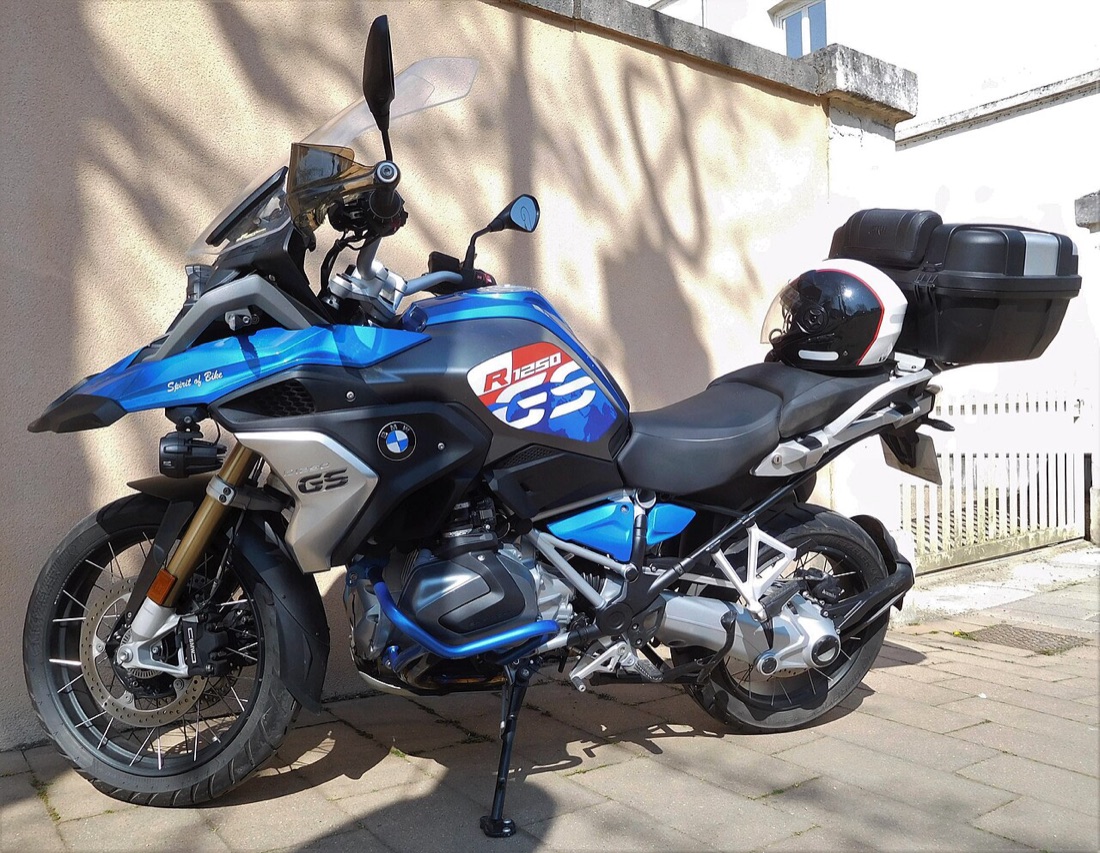
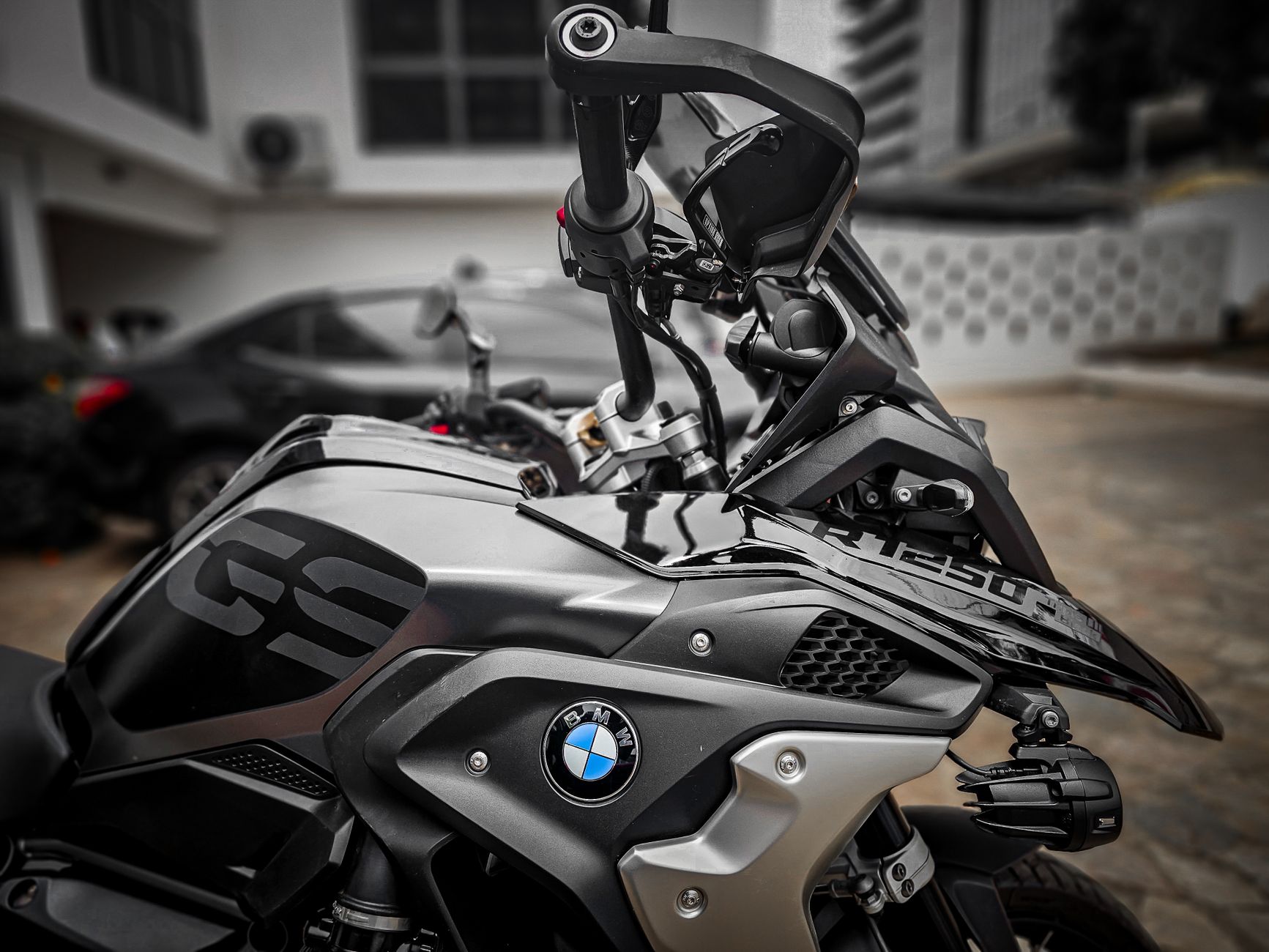
The shaft drive of the BMW R1250 GS represents one of the main reasons why so many motorcyclists choose this model for their long journeys. After 20 years maintaining BMW boxers, I can affirm that a well-maintained shaft drive easily covers 200,000 km without issue. Maintenance requires few interventions but absolute rigor regarding oils and intervals. I detail here the complete procedure for draining the Paralever and differential, with exact capacities and torque specifications that I apply in the workshop.
Shaft drive versus chain: assessment after 150,000 km
Shaft transmission offers concrete advantages that I observe daily on the machines that come through the workshop. A standard chain requires lubrication every 500 to 800 km, tension checked every 1,000 km, and complete replacement around 25,000-30,000 km for approximately €250 (chain kit + sprockets + labor). Over 150,000 km, this means 5 complete replacements, or a minimum of €1,250.
The R1250 GS shaft drive only requires:
- A Paralever oil change every 40,000 km (150 ml of 75W-90 oil)
- A differential oil change every 40,000 km (200 ml of 75W-90 oil)
- Visual inspection of boots every 10,000 km
Over 150,000 km, this means 3 to 4 complete oil changes for a total cost of approximately €400-500 including labor. The savings exceed €750 over the motorcycle's lifespan, not counting time saved on routine maintenance.
Cleanliness represents the other major advantage. After a ride in the rain, the swingarm remains spotless whereas a chain sprays black lubricant on the rear rim, fender and sometimes panniers. Shaft drive motorcycles that I prepare for sale consistently have a cleaner rear end, which facilitates the transaction.
"A properly maintained shaft drive with quality oil regularly covers 250,000 km without major intervention. I've seen 2002 R1150 GS models with their original shaft drive and 280,000 km on the clock." - Klaus, independent BMW mechanic
Weak points exist: additional weight (approximately 8 kg compared to a chain), torque effect on kick-down that slightly raises the rear during hard acceleration, and the impossibility of easily modifying the final drive ratio. But for a road-oriented adventure bike like the R1250 GS, these compromises remain largely acceptable.
Transmission oil: no compromise on spec
The API GL-5 75W-90 specification is non-negotiable. I've seen three shaft drives damaged by unsuitable oils: two with 10W-40 engine oil and one with 75W-80 GL-4. The extreme pressure additives in GL-5 protect the bevel gears in the differential which endure enormous stresses, particularly during uphill starts when loaded.
BMW recommends its own transmission oil reference 83 22 0 439 021, sold for approximately €18 per liter. I also use successfully:
- Motul Gear 300 75W-90 (approximately €16/L)
- Castrol Syntrax Universal Plus 75W-90 (approximately €14/L)
- Liqui Moly Hochleistungs-Getriebeoil 75W-90 (approximately €17/L)
The total capacity for a complete change (Paralever + differential) reaches 350 ml. I systematically order 500 ml to have a margin and be able to top up if necessary. A one-liter bottle is therefore enough for two complete changes.
The 75W-90 viscosity works in all latitudes. In Norway as in Morocco, this grade ensures the right compromise between cold fluidity and high-temperature protection. The GS models I service run between -15°C in winter in the mountains and +45°C in summer in Andalusia without problem.
Paralever drain: step by step
The Paralever is BMW's specific swingarm that incorporates an auxiliary shaft drive and absorbs torque reactions. Its oil change requires methodical approach but remains accessible with basic tools.
Required equipment:
- 14 mm hex key
- Torque wrench (torque of 28 N·m)
- Drain pan minimum 500 ml
- Filling syringe with flexible tube (or oil pump)
- Lint-free rags
- Drain plug seal (BMW reference 33 11 7 662 314, approximately €2 each)
I start by riding 5-10 km to bring the oil up to temperature. Warm oil flows better and carries more metallic particles. Then, I position the motorcycle on its centerstand on perfectly level ground. The fill level depends on the machine being horizontal.
The Paralever drain plug is located at the end of the swingarm, on the left side when looking forward. It's a plug with 14 mm internal hex. I first loosen by a quarter turn to check for absence of overpressure, then remove completely with the pan positioned underneath. The oil drains for a good 5 minutes.
During drainage, I inspect the condition of the used oil. A grayish color with fine shiny metallic particles remains normal: these are residues from gear wear. However, large chips or milky emulsion (water in the oil) indicate a serious problem requiring thorough investigation.
Once drainage is complete, I clean the plug threads and housing in the case with a clean rag. I systematically replace the copper sealing washer. A reused seal risks leaking, and at €2 each, it's not where to economize.
The fill plug is located on top of the Paralever, accessible after removing the plastic cover. I open it with the same 14 mm key. The Paralever capacity is exactly 150 ml. I use a 100 ml syringe with a 30 cm flexible tube to inject the oil cleanly. Some prefer a manual oil pump, which also works very well.
I fill slowly until the oil is level with the fill hole. The excess will leak out slightly when I screw in the plug. I let it rest for 2 minutes for air bubbles to rise, then top up if necessary before screwing back the fill plug with its new seal. Torque specification: 28 N·m for both plugs.