Sound Tells the Story
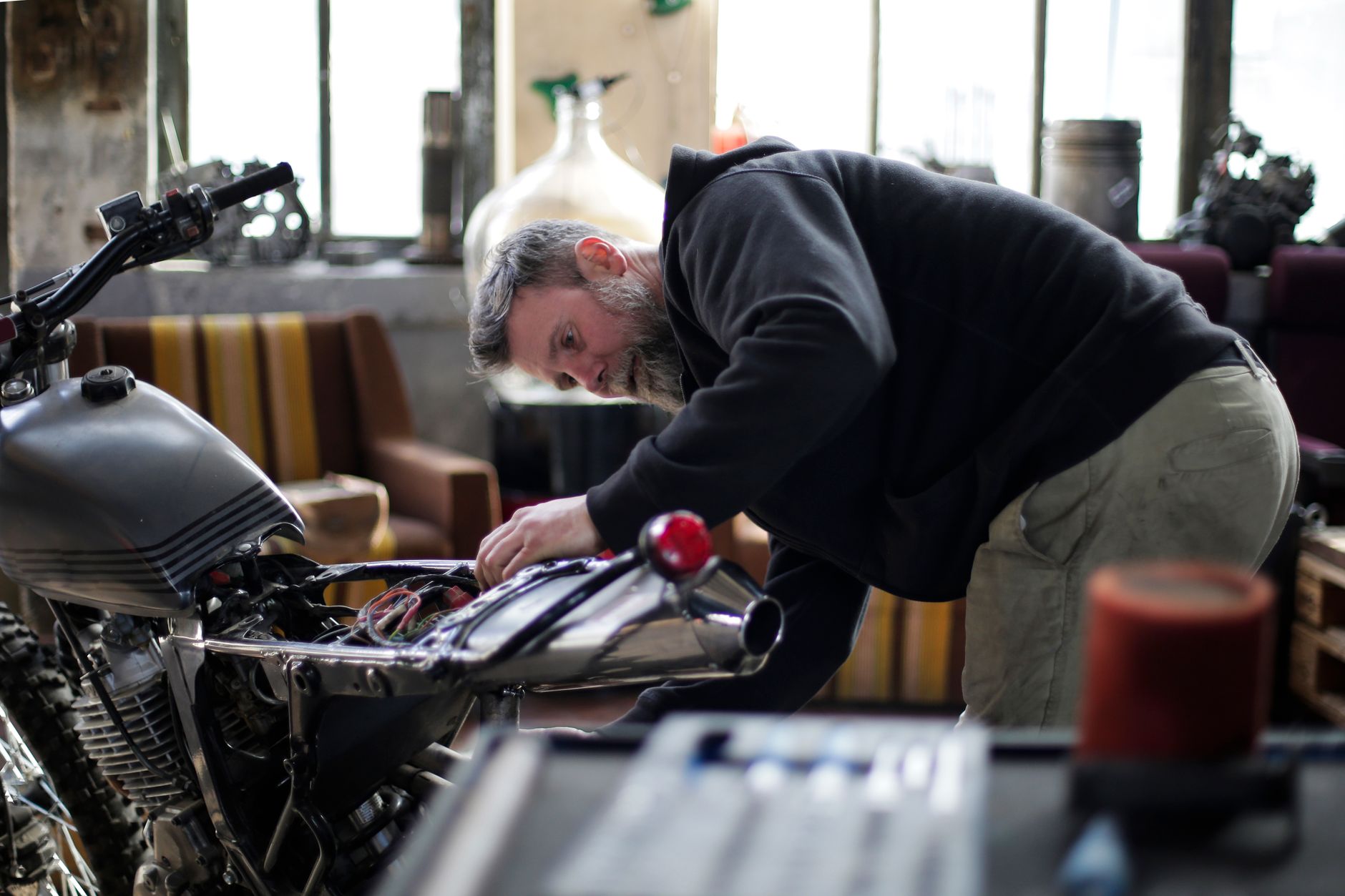
A healthy motorcycle has a regular, predictable sound. When a new noise appears, it's a mechanical message. Locating it quickly prevents a minor issue from turning into an engine failure. The key: identify when the noise occurs (idle, acceleration, braking, cornering) and where it comes from (top end, bottom end, running gear, transmission).
Regular Ticking at Idle
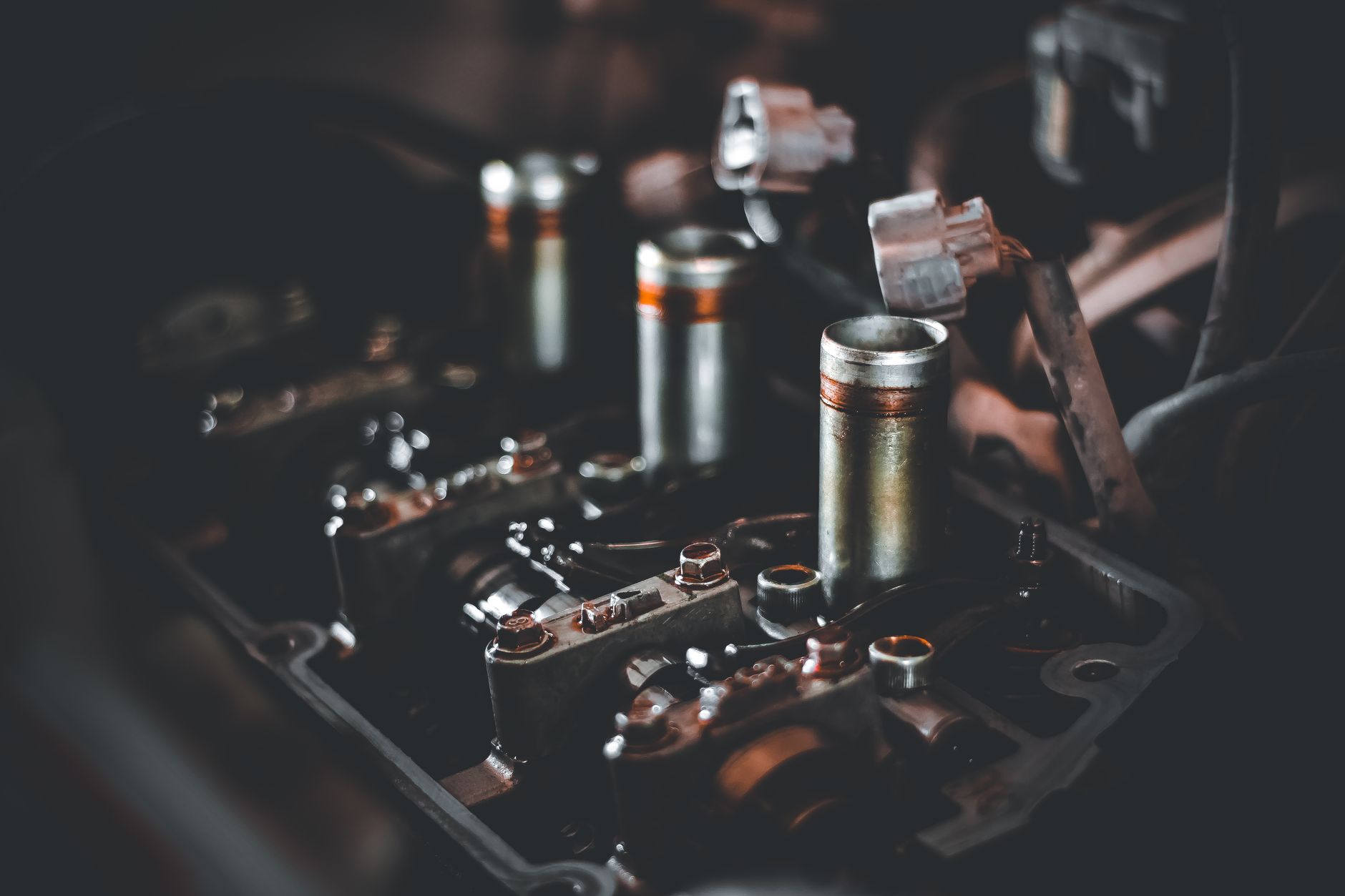
A rhythmic metallic ticking at idle that speeds up with RPM points to the valve train or cam chain. On engines with a cam chain, it's often the chain tensioner that's worn or the guide slipper that's degraded. The chain develops slack and slaps against its guide.
- Severity: moderate to high. A cam chain that's too loose can skip a tooth and cause piston-to-valve contact on an interference engine.
- Check: listen with a mechanic's stethoscope (or a long screwdriver placed against the crankcase, ear on the handle) on the cam chain side. Compare cold vs warm — a hydraulic tensioner takes a few seconds to fill with oil at start-up, so the ticking may disappear once warm.
- Action: if the noise persists when warm, replace the tensioner and inspect the guide slipper and chain.
Special case: on engines with adjustable valves (shim-over-bucket or screw-and-locknut), ticking at idle may simply mean excessive valve clearance. A clearance check against manufacturer specs will confirm.
Whistling While Riding
A high-pitched whistle that appears while riding and varies with road speed (not engine RPM) points to bearings. The two main suspects:
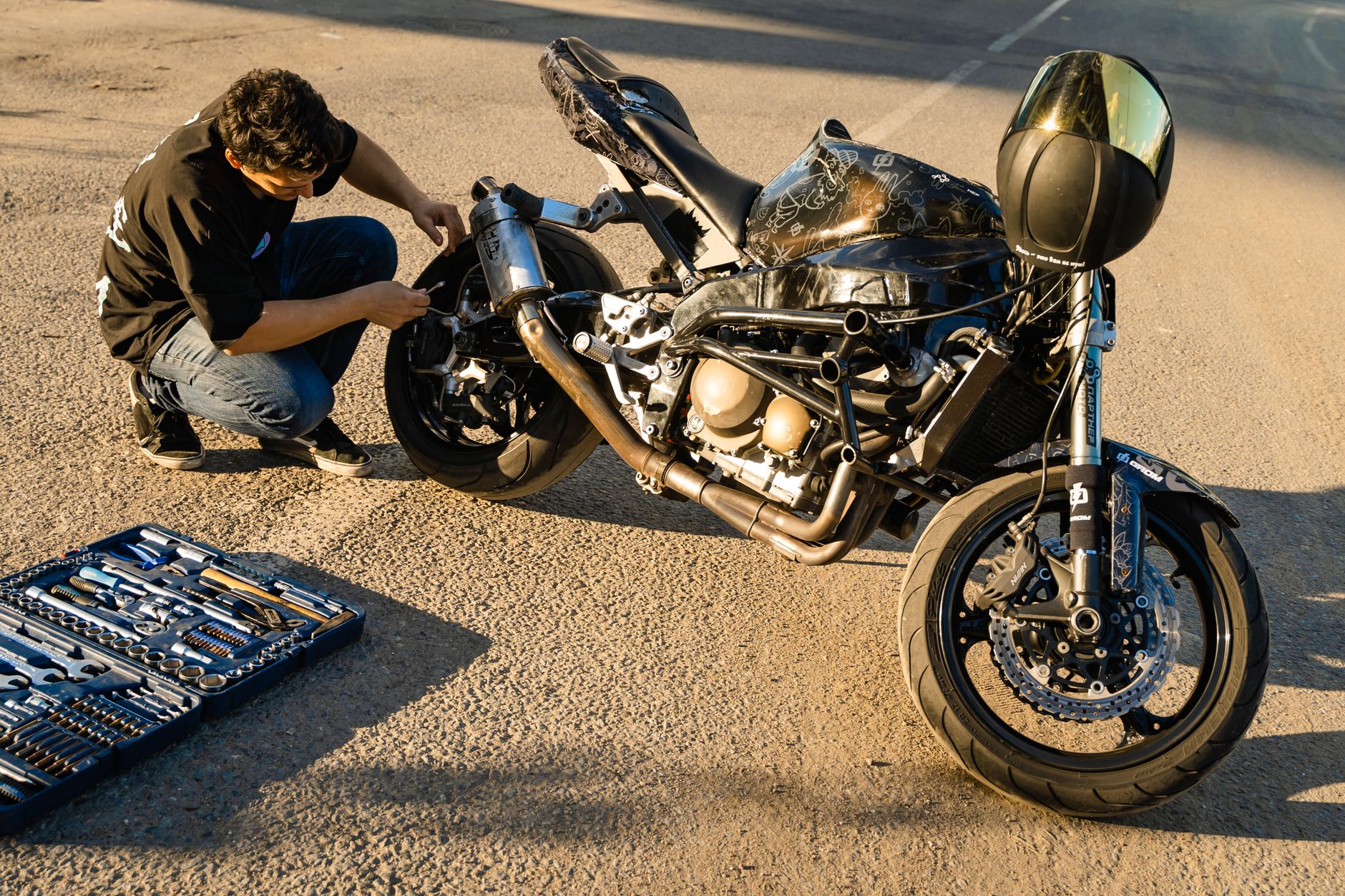
- Wheel bearings — The whistle increases with speed and may change in corners (louder on one side). Raise the wheel and spin it by hand. A worn bearing produces a grinding noise or noticeable lateral play.
- Steering head bearings — Whistling or clicking at low speed, especially when manoeuvring. Raise the front end, turn the bars slowly: a notch or detent indicates damaged races.
- Severity: high. A wheel bearing that fails while riding means a guaranteed crash.
- Action: replace the bearing as soon as you detect play or abnormal noise. Wheel bearings are pressed in and out.
Scraping When Braking
A scraping or metallic grinding noise when braking is almost always related to the brake system:
- Worn pads — The friction material is consumed and the wear indicator (metal tab) is rubbing against the disc. This is a warning: replace the pads immediately.
- Warped or scored disc — An intermittent rub (once per wheel revolution) indicates a warped disc. Continuous scraping with visible grooves on the disc means it needs replacing. Measure minimum thickness with a calliper and compare to the manufacturer's spec.
- Foreign object — A small stone trapped between pad and disc produces a sharp intermittent noise. Remove the wheel and inspect.
Note: new pads can squeal for the first 50 km during bedding-in. If the noise persists beyond that, check calliper alignment and disc cleanliness.