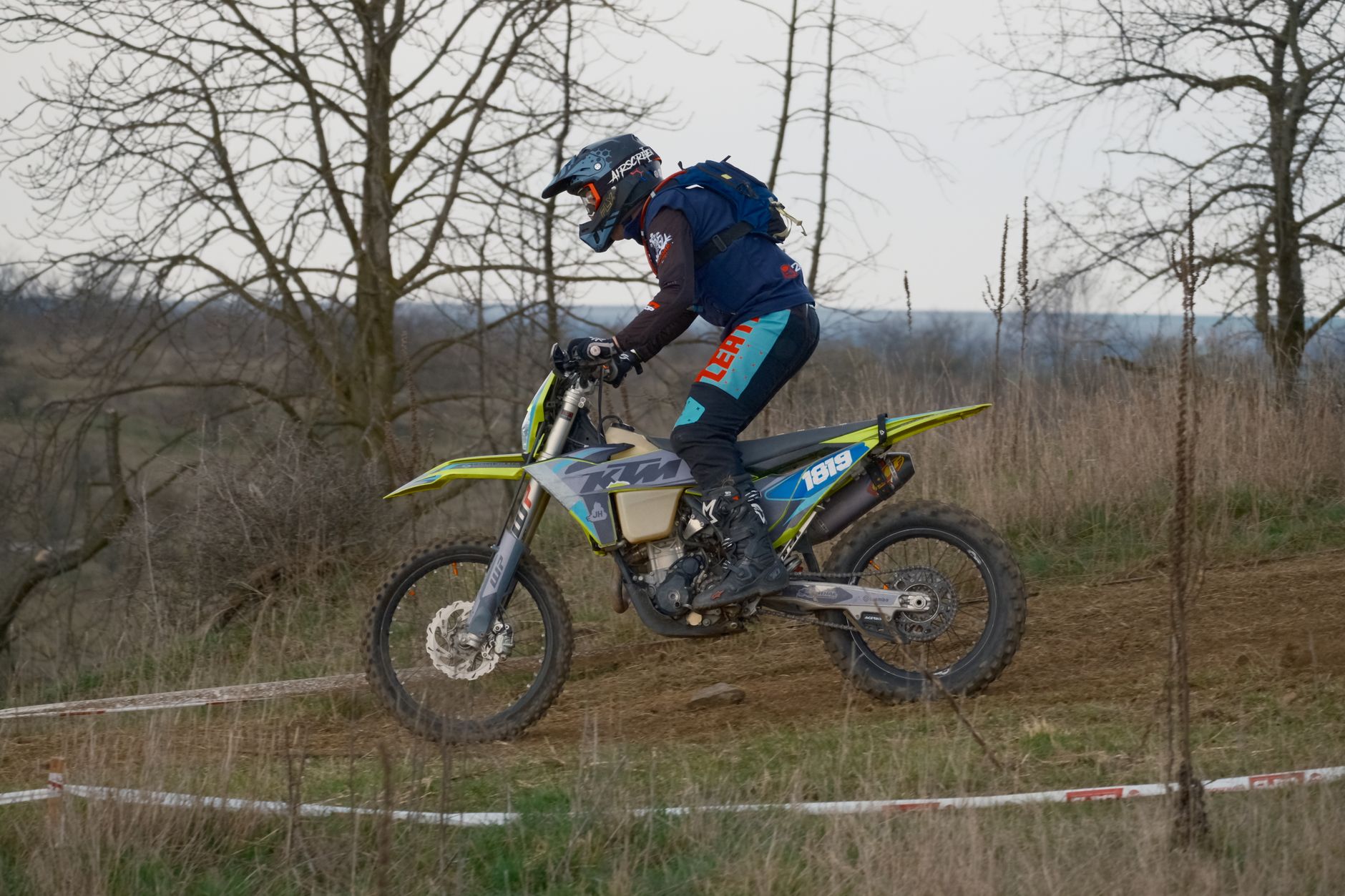
I spent fifteen years maintaining single-cylinder KTMs, and the 690 Enduro R remains one of the most exciting machines in the adventure segment. Its 690 cc LC4 produces 74 horsepower at 7500 rpm, with torque of 73.5 N·m at 5500 rpm. This single turns forest trails into a playground, but it demands rigorous attention. Certain weak points consistently appear on machines that exceed 20,000 km. Knowing these weaknesses before they turn a ride into a nightmare—that's the difference between a prepared rider and a guy pushing his bike for 15 km.
The water pump and its cursed seal
The water pump seal on the 690 Enduro R is the Achilles' heel of the cooling system. Between 15,000 and 30,000 km, this 12x22x7 mm oil seal starts to weep. You first notice a few drops of coolant under the bike after an intensive ride. Then it gradually gets worse.
The problem comes from the system's very design: the water pump is mechanically driven by the camshaft via a shaft that passes through the crankcase. This seal must therefore handle rotation while maintaining sealing against a liquid that easily reaches 95°C. The single's vibrations eventually harden the seal, which loses its elasticity.
Warning signs:
- Brownish traces on the right side engine case
- Gradual drop in coolant level (200-300 ml every 1000 km)
- Sweet smell after a spirited ride
- Stains on the ground under the water pump area
Replacing the seal costs about €45 for the OEM part (KTM reference 59036015000), but the job requires removing the pump cover, pump impeller, and partially draining the circuit. Figure 2.5 hours of labor if you go through a shop, or about €180 total.
My advice: replace this seal preventively at 25,000 km. I personally use a reinforced Viton seal (Athena brand) that handles temperatures better. It costs €15 more but easily lasts 40,000 km. Take the opportunity to check the pump impeller condition: the blades wear over time and reduce flow.
The timing chain tensioner that fails
On 2012-2017 models, the automatic timing chain tensioner is problematic. This hydraulic system maintains tension on the chain that drives the camshaft. When it wears out, the chain develops slack and rattles against the cases. The characteristic noise sounds like a metallic clicking at idle, which often disappears above 2000 rpm.
I've seen three 690 Enduro Rs with failed tensioners before 35,000 km. In one case, the chain had developed so much slack it jumped a tooth on the camshaft sprocket. Result: timing offset, power loss, and a mandatory shop visit to reset the timing.
"The timing tensioner on the LC4 690, it's not if you'll change it, it's when. Everyone who rides serious enduro replaces it before 40,000 km." — KTM technician with 12 years' experience
The solution:
The OEM tensioner (reference 75036002000) costs €125. Some go straight to the Rottweiler Performance heavy-duty kit (€180) which incorporates a stronger spring. Installation requires removing the tank, right side cover, and valve cover. Total budget with labor: about €320.
Check chain tension every 10,000 km by turning the engine with the kickstarter and listening. A slight clicking at idle is already too much. The chain itself should be replaced at 60,000 km maximum, even if the tensioner is still functioning.
The temperamental sidestand switch
The sidestand switch regularly fails on the 690 Enduro R. This small electrical switch cuts ignition when the stand is deployed and you engage a gear. Mandatory safety feature, but mediocre execution by KTM.
The problem: the switch is mounted low on the frame, exposed to water spray, mud, and gravel. Its connections oxidize, the internal mechanism seizes. Consequence: the bike refuses to start or stalls as soon as you touch the shifter. Some models between 2008 and 2015 experienced particularly bad batches.
Typical symptoms:
- Starter that won't turn despite charged battery
- Engine that cuts out when you lift the sidestand
- Dashboard warning light that blinks erratically
- Need to fiddle with the stand to get the starter to respond
The OEM switch (reference 61311051000) costs €38. Replacement takes 20 minutes flat: two mounting bolts, two terminals to disconnect. Total with dealer labor: about €90.
The smart upgrade:
Many owners switch to the reinforced Duke 690 switch (reference 90111051000), better sealed and more reliable. It costs €52 but permanently eliminates the problem. Some completely bypass the system and install a permanent jumper, but that's inadvisable for resale and technically illegal on the road.
Clean electrical contacts with WD-40 Contact Cleaner spray every 5000 km if you regularly ride in wet conditions. A thin layer of dielectric grease on the terminals adds extra protection.
The fuel gauge that lies
The 690 Enduro R's fuel gauge is a lottery. The float that measures level in the 12-liter tank quickly loses accuracy. Result: the indicator shows three bars when there's barely 2 liters left, or drops to zero with 4 liters still in the tank.
This problem stems from the plastic float that deforms over time and with temperature variations. Fuel also contains additives that foul the rheostat contacts. On machines that have taken a beating off-road, repeated impacts deform the float arm.
I met a guy who ended up stranded 80 km from home with two bars still showing on the gauge. Since then, he rides with a 2-liter can in his backpack. Not optimal.
Practical solutions:
Replacing the complete gauge (reference 75007088000) runs €215 for the part alone. Installation requires draining the tank, removing the seat and side cover. Figure €280 all-in.
More economical alternative: clean the existing system. Drain the tank, remove the gauge, and clean the rheostat with contact cleaner. Slightly bend the float arm to recalibrate the reading. It only costs time and wasted fuel, and often lasts another 15,000 km.
The real adventurer's solution: ignore the electronic gauge and rely on the odometer. With a 12-liter fill and average consumption of 4.8 l/100 km in mixed use (road + trail), you have about 230 km real range. Fill up every 200 km, problem solved.