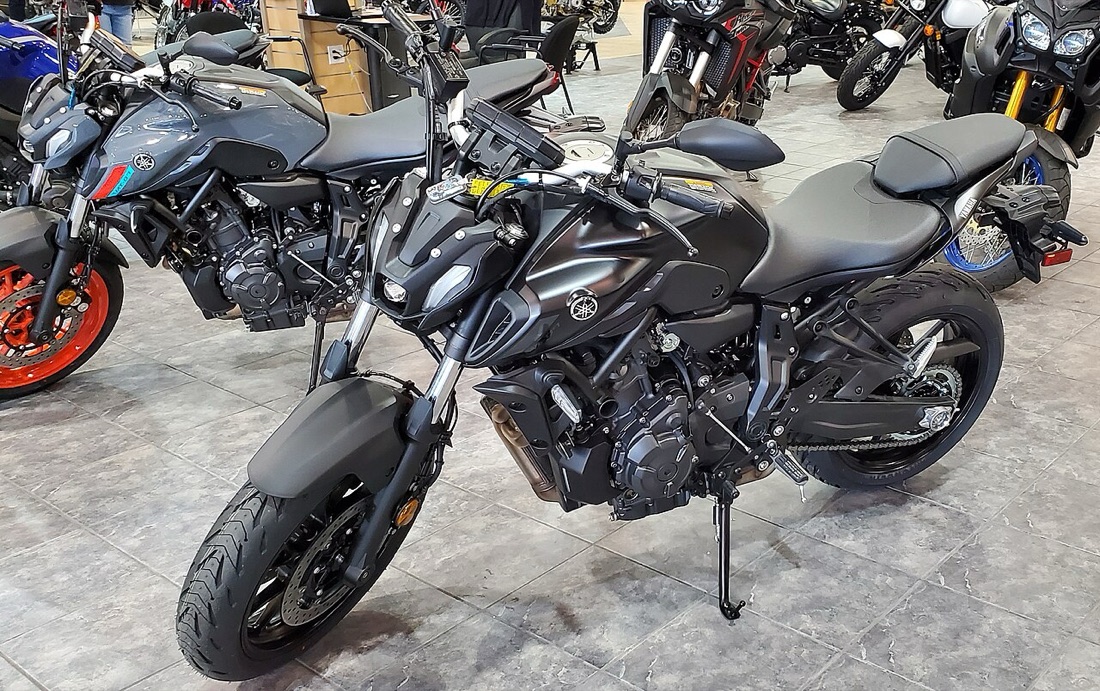

Buying someone a tool means betting on how somebody else works. The bet is often lost, and always the same way: you buy the thing that looks complete, the neatly laid-out case, the gadget that does five jobs, when the person would have used one boring £30 tool fifteen times a year. A birthday, a retirement, a first motorbike, moving into a house with a garden: the reasoning is the same all year round.
Sorting it out is actually fairly simple, because tools fall into two clear categories. There is what gets used on every job, whatever the machine, and there is what gets used once every three years. The first category makes gifts that last ten years. The second makes gifts that get lent to a neighbour and never come back.
The rule: what gets repeated, not what impresses
A good tool as a gift meets three criteria at once: it gets used on every job, it saves time or adds precision, and the person would not buy it for themselves because there is no satisfaction in it.
That third criterion is what makes the difference. Nobody spontaneously treats themselves to a chain wear gauge, a smart battery maintainer or a box of nitrile gloves. Everybody uses them constantly once they have been given them. A thirty-function multi-tool, by contrast, ticks the spectacular box and neither of the other two.
Corollary: consumables are underrated as gifts. A bundle of degreaser, threadlocker, copper grease, cable ties, heat-shrink tubing and stainless fasteners costs £25 to £45, gets used up entirely, and is always the thing missing at nine on a Sunday evening.
Three questions before you pay
- Do they already have one? With tools, a duplicate is nearly always useless, except for consumables and the spanners that go missing. A phone call to somebody close to them beats a returns receipt.
- Does it match their standards? This is trap number one. Battery platform, socket drive size, screw drive type, wheel axle diameter, chainsaw chain pitch. An incompatible tool is not half a present, it is none.
- Is there anywhere to put it? A workstand or a roller cabinet transforms life for somebody with a garage, and clutters up a flat. Available space is as real a constraint as the budget.
£20 to £35: what earns its keep in the first hour
At this level you are looking for one decent individual tool, not an assortment. A single good spanner beats a mediocre set.
| Area | Idea at £20-35 | Why it gets used |
|---|---|---|
| Bike | Chain wear gauge (£10-22) and a decent chain tool (£22-40) | These are the two tools that stop you paying for a cassette on top of a chain |
| Bike | Set of long ball-end hex keys | You touch them at every adjustment, and short ones chew up the bolts |
| Motorcycle | Spark plug socket with a rubber insert, in the right size | Without it you break a plug or drop one down the well |
| Motorcycle | Set of feeler gauges for checking valve clearances | Essential the moment somebody wants to follow their own service schedule |
| Power tools | Round files, file guide and sharpening gauge in the right pitch | The pitch is stamped on the links: check before buying |
| Power tools | Cone-type blade balancer (£7-18) and a 2-stroke measuring jug (£13-25) | Two tools nobody ever buys for themselves and that get used every season |
| Any | Rechargeable magnetic LED inspection lamp (£22-50) | The most borrowed and most missed object in any workshop |
£35 to £85: the measuring tier
This is the band where you move from doing to measuring, and it is the one that adds the most. An amateur mechanic makes progress the day they stop guessing.
- A decent multimeter, £25 to £70. It settles the majority of electrical faults on a motorbike, an e-bike, a tractor or a mower: resting voltage, charging voltage, continuity, voltage drop. It is probably the best usefulness-to-price ratio on this whole list.
- A smart battery charger-maintainer, £35 to £80. For any machine that sleeps part of the year. It routinely doubles the life of a lead-acid battery, which itself costs £50 to £130.
- A rear paddock stand for a motorcycle, £50 to £130. It transforms chain, tyre and rear wheel maintenance.
- A compression tester, £25 to £70. For anyone buying second-hand or looking after an older machine, it is the diagnostic tool that decides a budget.
This is also where torque wrenches start, with an important reservation set out below.
£85 to £170: what changes the way you work
- A stable bike workstand, £85 to £210. It does not do one job for you, it changes your working posture and therefore how often you service anything.
- A motorcycle scissor lift, £85 to £210. Same logic, with safety on top: you stop working on a machine that is balancing.
- A quality torque wrench. Reckon on £50 to £130 for a small 2-20 Nm range suited to bikes and electronics, £50 to £175 for a 20-110 Nm that covers most of a motorcycle. Our comparison on choosing a torque wrench explains why the ranges matter more than the brand.
- A bench chain grinder, £70 to £175. Worth it for anyone cutting several cubic metres of firewood a year, pointless for pruning two branches.