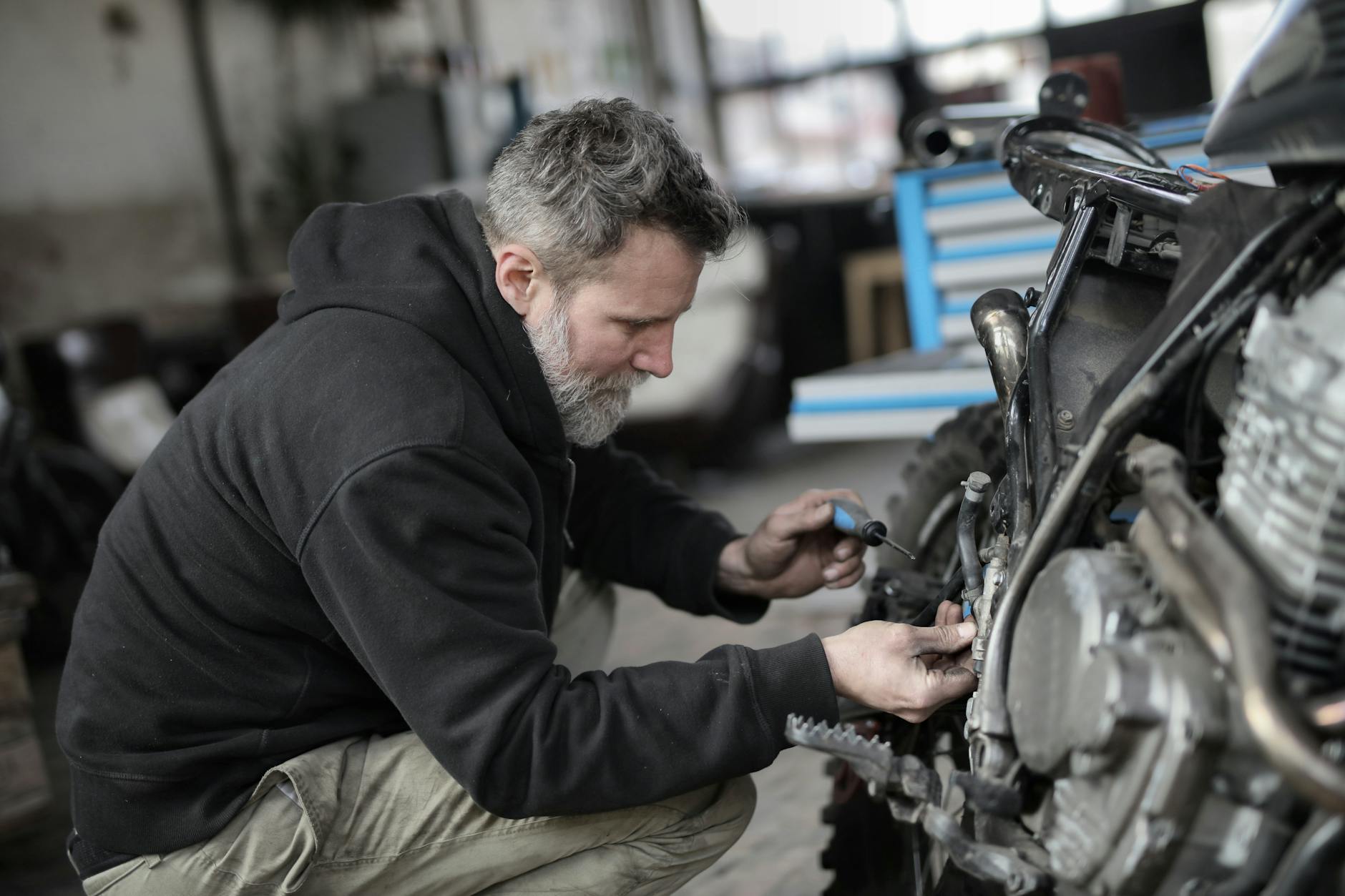

Motorcycle and bicycle theft remains massive, and most victims find out after the event that their protection didn't match what their policy demanded. The subject mixes three separate things: preventing the theft, making recovery possible, and getting paid out. No single device does all three.
Preventing: locks
A lock is not a barrier, it is a length of time. Test standards measure resistance to defined attack methods over a set period. A well-equipped thief gets through in the end; the aim is that he picks another machine before he starts.
Three principles that make the difference:
- Combine two different kinds of attack. A chain and a D-lock don't yield to the same tool. Two locks of the same type don't double the time; two different types force the thief to carry two tools.
- Secure to a fixed point. A lock that only goes round a wheel or a frame lets the whole machine leave in the back of a van. On a motorcycle, a ground anchor in the garage changes everything.
- Never leave the lock on the ground. A D-lock resting on tarmac can be smashed open. Held off the ground, with nothing behind it, it resists far better.
For a motorcycle, a disc lock with a reminder cable to the bars is a supplement, not a primary defence: it stops the bike being ridden away, not lifted away.
Getting paid out: what the policy actually says
This is where most claim refusals happen. Motorcycle policies almost always condition theft cover on three cumulative points:
- A lock from a specified list, usually a Sold Secure rating your insurer recognises — Gold or Diamond depending on the policy. A technically excellent lock that isn't rated counts for nothing under the contract.
- Proof that the device was actually used — hence the importance of keeping the receipt and the certificate, and of reporting lost keys.
- Parking conditions, sometimes spelled out: locked garage overnight, ground anchor, secure parking.
For a valuable bicycle, cover usually comes through a dedicated policy or a home insurance extension, with the same logic: rated lock, marking sometimes required, and single-item limits well below the value of the bike unless you raise them.
The useful habit, once a year: reread the policy schedule and check that what you actually use matches it. Five minutes that prevent a refused claim.
Recovery: marking
Marking prevents nothing and deters only marginally. It does something else: it makes the machine identifiable, and therefore returnable, and it makes resale harder.
In the UK there is no legal requirement to mark a bike, but the voluntary registers are well established — BikeRegister and Bike Index are the two most widely used, and police forces routinely check them. The logic is simple: with no registered identifier, a recovered bike can't be returned to anyone, and forces end up storing thousands of unidentifiable bikes.
Three practical points:
- Keep the record up to date if you sell or move house. A marking still attached to a previous owner is no use to anyone.
- Report the theft on the register as well as to the police: that is what makes the machine detectable at a roadside check or on a sale.
- Check the status before buying used. An identifier reported stolen can be checked online. It has become a standard buying reflex.
For a motorcycle, the equivalent is the frame number (VIN), backed up by the additional markings some schemes offer. Checking the paperwork before you buy plays the same role: the V5C logbook in the seller's name, and the online MOT history, which also tells you whether the annual test has been kept up since the bike turned three.
Locating: trackers
A GPS tracker doesn't protect anything: it sometimes allows recovery. What to know before expecting too much of one:
- Accuracy and availability depend on where the machine is. In a basement lock-up, a metal container or an underground car park, the signal doesn't get through.
- Battery life is a trade-off between position reporting frequency and endurance. A tracker reporting every minute lasts a few days; one reporting once a day lasts months.
- The power supply matters. A tracker wired to the battery is easy to find and cut; a self-powered one, well hidden, is more discreet but needs recharging.
- Recovery is never a personal matter. You pass the position to the police; going to retrieve a machine yourself from premises you don't know is a very bad idea.
Some insurers give a discount when an approved tracking device is fitted and declared. Check the policy: here again, approval counts for more than technical performance.