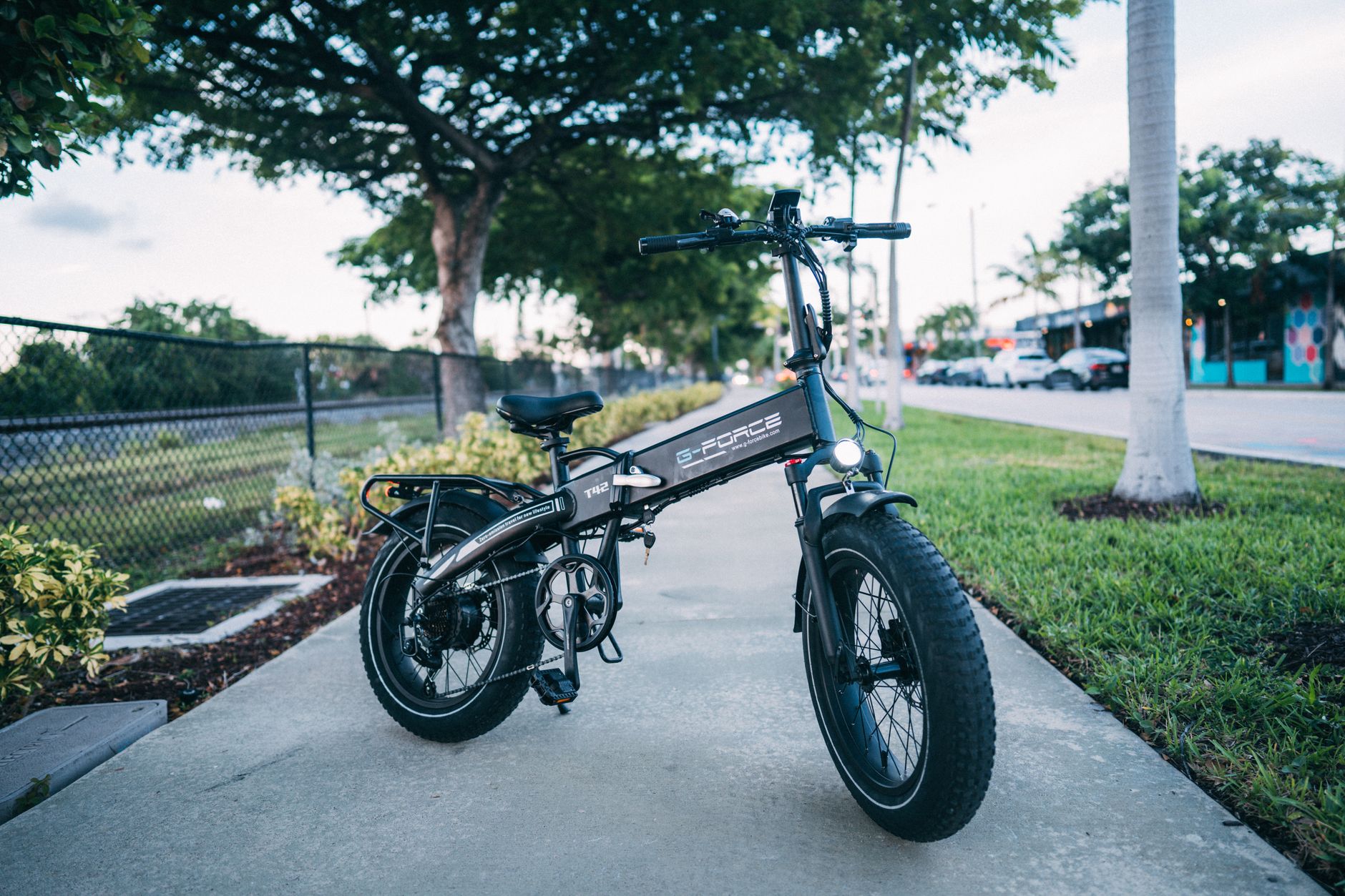
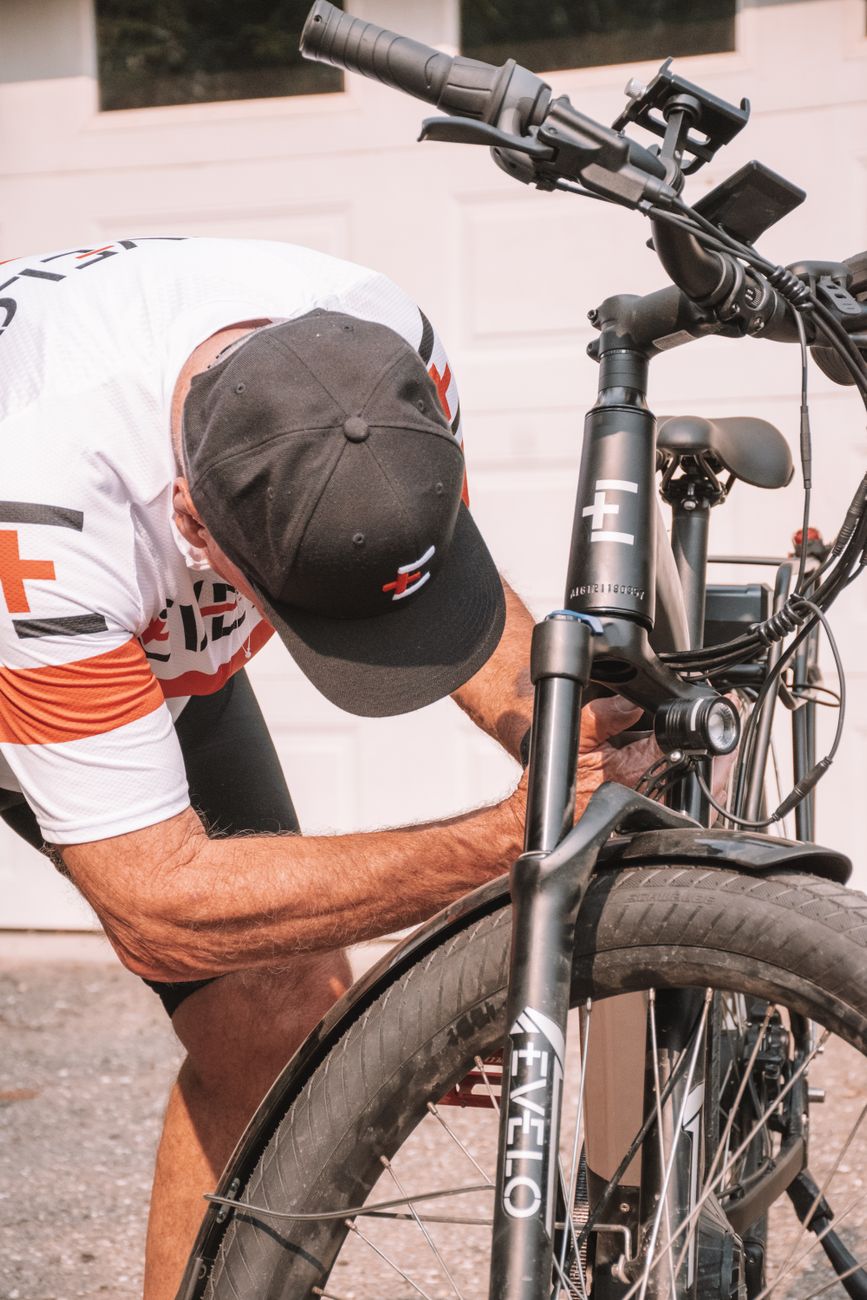
A broken Chinese e-bike isn't necessarily one for the tip. In most cases the frame, drivetrain and brakes are fine: it's the electrics that give up, and a marketplace bike's electrics are often simpler, and more standard, than you'd think. Hub motor, controller in a box, display, pedal sensor, battery: five blocks, linked by a handful of connectors.
Here's the method to find the fault, what original parts cost (prices taken from the brands' shops on 16 October 2026, in euros), and the alternatives when the brand no longer sells anything.
First of all: safety
- Battery removed before unplugging anything on the controller or motor side.
- Don't open a battery pack yourself: a short circuit on a 48 V 15 Ah pack releases enough energy to start a fire. Diagnosis is done at the terminals, dismantling at a specialist.
- A battery that's swollen, been dropped, heats up or smells: don't charge it again, store it outside, away from anything, and take it to a collection point.
Diagnosis in four symptoms
1. Nothing lights up
The most common, and often the least serious.
- Is the battery properly seated? On frame-mounted batteries, a lock or rail not fully engaged cuts the contact. Remove, refit, lock.
- Battery switch ON (many packs have one) and any fuse.
- Voltage at the terminals with a multimeter: a charged 36 V battery reads about 41-42 V, a 48 V about 54-55 V. If you read zero while the charger says "charged", the BMS (protection circuit) has probably tripped.
- The main connector between battery and controller: corroded, pin pushed back, wire torn at the fold. On folders, the loom runs through the hinge and suffers with every fold.
On a Fiido D11, for example, an owner described repeated motor and display cut-outs after riding through a flooded street: water in the low connectors is a classic.
2. The display lights up but there's no assistance
- The brake cut-offs. Each lever has a switch that cuts the motor when braking. A lever left slightly pulled, a misaligned switch or a cut wire, and assistance never comes back. Unplug them one at a time to test.
- The pedal sensor (magnetic disc at the crank or torque sensor): disc shifted, sensor too far away, cable pinched.
- The speed sensor (magnet on a spoke or sensor built into the motor): without a speed signal, some controllers cut out or show a code.
- An error code. That's the best clue. Depending on the display, see our guide to Chinese e-bike display error codes, the one for the KT controller and LCD3 display, or the Bafang codes if your motor is a Bafang (ADO, some Engwe P275).
3. The motor judders, makes noise or cuts out under load
- Motor juddering at start, turning in jerks: often a Hall sensor in the motor or a damaged phase wire. The wires exit through the hub motor axle and suffer when the wheel is loose or the cable rubs. Engwe's warranty explicitly mentions a "burnt Hall-sensor wire".
- Clicking in the hub motor: internal freewheel or worn nylon gears in a geared motor. These can be replaced part by part on common motors. Our guide to diagnosing Chinese hub motors covers the tests.
- Cut-outs on climbs or under heavy load: a tired battery whose voltage collapses (the BMS cuts out), or an overheating controller.
4. The range has melted away
A lithium battery loses capacity with cycles, age, heat and storage at 100% or empty. Engwe replaces a battery under warranty if its capacity falls below 60%. Out of warranty, two options: a new original battery or a rebuild.
What original parts cost
| Part | Fiido | Engwe | Himiway (EU shop) |
|---|---|---|---|
| Battery | €165 to €773 | €209 to €399 | €599 to €789 |
| Controller | €40 to €100 | not sold separately | not listed |
| Display | €37 to €110 | not listed | not listed |
| Motor | €143 to €371 | not listed | €999 to €1,499 |
| Charger | €35 to €75 | €99 | not listed |
Fiido is the benchmark: you can still find controller, display, motor and battery for models discontinued years ago (D2S, M1, L2, Q1). It's a buying criterion in its own right, covered in our guide to Chinese brands.