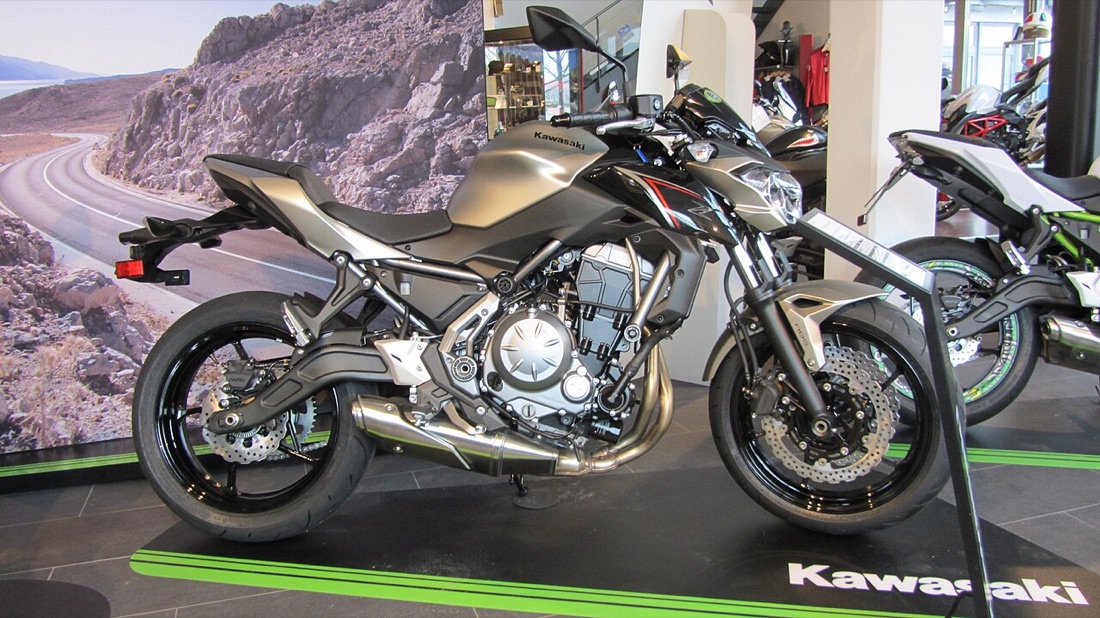
The 649 cc parallel-twin engine in the Z650 is a sprightly, lightweight and economical-to-maintain piece of engineering. Derived from a proven lineage, it's forgiving but responds well to rigorous servicing. Here are the key points to maintain your Z650 and anticipate known weaknesses.
Kawasaki service intervals
The Z650 engine shares its foundation with the Ninja 650 and ER-6. The intervals are reasonable, with valve clearance checks fairly well spaced.
| Service | Indicative interval |
|---|---|
| Oil and filter change | 6,000 km or 1 year |
| Valve clearance check | 42,000 km |
| Brake fluid | 2 years |
| Coolant | 3 years |
| Spark plugs | 24,000 km |
| Air filter | 18,000 km |
The 6,000 km oil change is closer than on some other twins. These values remain indicative: check your specific model year, especially between pre- and post-2020 versions. Before the riding season, also plan any MOT testing if your bike is due.
Torque values to know
Keep these figures in mind for routine maintenance, but confirm for your exact model:
- Drain plug: approximately 30 Nm
- Spark plugs: approximately 15 Nm
- Front wheel axle: approximately 78 Nm
- Rear wheel axle nut: approximately 98 Nm
- Front brake calliper bolts: approximately 34 Nm
The full torque table is in our motorcycle torque specification guide. For the precise torque value for your Z650 model year, ask L'Atelier's mechanic AI, which draws on the official Kawasaki workshop manual.
Known problem areas
The Z650 is reliable, but a few details crop up among owners:
- Voltage regulator: as with many Kawasakis, monitor battery charge. A tired regulator shows itself as a battery that drains quickly.
- Corrosion: fasteners and certain brackets rust quickly in wet winter conditions. Preventive greasing limits damage.
- Rear suspension: the original mono-shock is firm and basic. You'll feel it on rough roads but it remains reliable.
- Brake pads: front wear can sometimes be rapid depending on riding style.