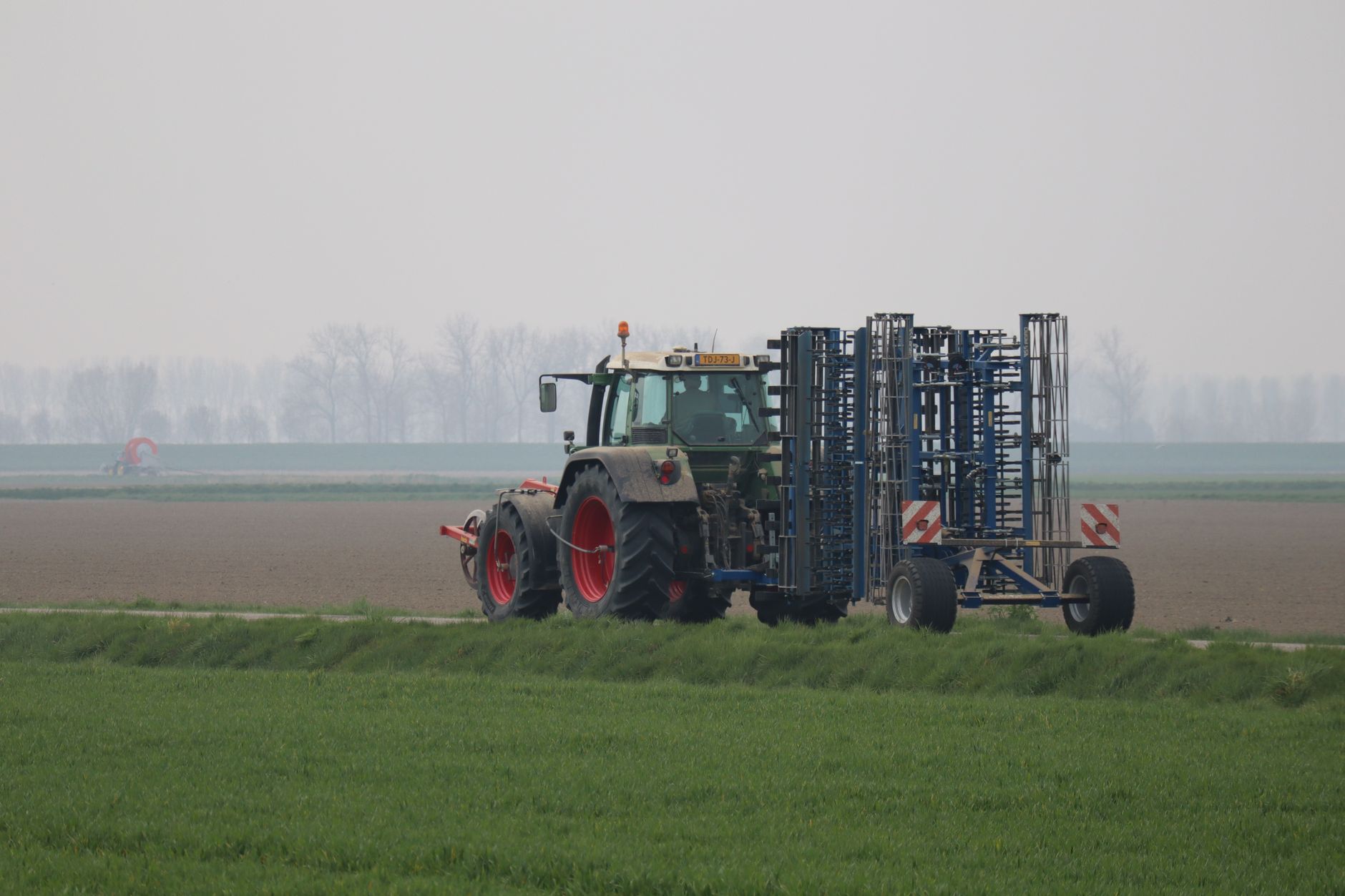
Tractor tires: pressures, lug wear and low-pressure technologies
M
Max
|4 minJanuary 4, 2026
Tires: the only contact between tractor and ground
A 6-ton tractor is only useful if its power reaches the ground. Tires are the critical interface — over-inflated, you compact the soil and spin. Under-inflated, you wear the sidewalls and burn more fuel.
Recommended pressures: key references
Pressures depend on load, speed, and work type. Here are typical ranges for a 100-150 HP tractor:
Front tires (steering):
Road: 1.6-2.0 bar
Field: 1.2-1.6 bar
With loaded front loader: 1.8-2.4 bar
Rear tires (drive):
Road: 1.2-1.6 bar
Field (plowing): 0.8-1.2 bar
Heavy transport: 1.4-1.8 bar
These values are indicative. Exact pressure depends on the tire (size, load index, technology) and actual load. Check the manufacturer's inflation table.
The golden rule: the lowest pressure compatible with the load. Every extra 0.2 bar means more compaction and less grip.
Water ballasting: why and how
Filling rear tires with water (water + antifreeze mix in winter) adds weight to the drive axle. It improves traction without adding mass to the tractor frame (unlike metal weights).
Recommended fill rate: 75% of tire volume. Beyond that, the tire loses flexibility and no longer acts as a cushion.
Weight calculation (example 520/85R38 tire):
Internal volume approximately 500 liters
75% = 375 liters of water = 375 kg per tire
On 2 rear tires = 750 kg additional
Advantages:
Low center of gravity (more stable than a hitch weight)
No investment (just water + antifreeze)
Increases traction by 15-25% in slippery conditions
Disadvantage: permanent weight, even when you don't need it (road). Modern solutions (central tire inflation, IF/VF) may be preferable.
Lug wear: when to change?
New tractor tire lugs are typically 45-65 mm tall. The legal wear limit for agricultural use is 20% of original height.
Signs it's time to change:
Lugs < 15 mm tall → greatly reduced grip
Asymmetric lugs (one side more worn) → alignment issue or improper pressure
On utilise des cookies essentiels au fonctionnement. Avec ton accord, on ajoute la mesure d'audience et l'attribution de nos liens/sondages partenaires (ça finance le service). En savoir plus