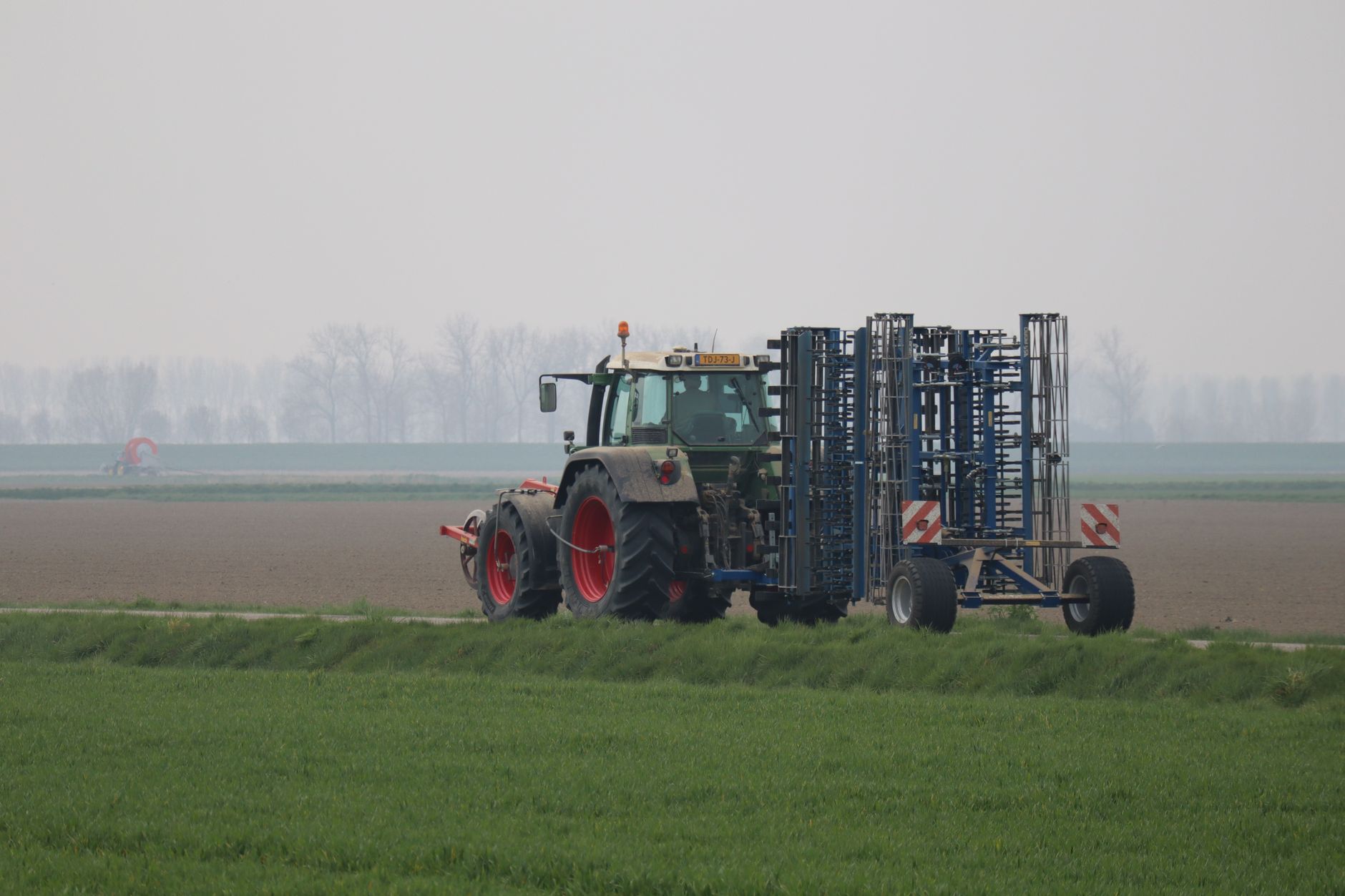

The hydraulic system: the tractor's nervous system
On a modern tractor, hydraulics do everything: front loader, three-point hitch, power steering, brakes, hydrostatic PTO, and sometimes even the transmission. When hydraulics weaken, the entire tractor loses productivity.
Typical working circuit service pressure is 180 to 200 bar. Steering and brakes operate on a separate circuit at 120-160 bar. When these pressures drop, symptoms appear.
The 5 most common symptoms
1. Slow or weak front loader
- Likely cause: worn pump (insufficient flow), internal leak in a cylinder, or cold/too viscous oil
- Test: measure raise time empty vs loaded. A gap > 30% indicates an internal leak
2. Three-point hitch drifting down
- Likely cause: internal leak at the hitch control valve, or faulty check valve
- Test: lift a heavy implement, shut off the engine. If the hitch drops more than 20 mm in 10 minutes, there's an internal leak
3. Stiff or slow steering
- Likely cause: worn steering pump, faulty orbital valve, or low oil level
- Warning: never drive a tractor with faulty hydraulic steering — it's an immediate hazard
4. Oil overheating (> 80°C)
- Likely cause: clogged oil cooler, relief valve stuck open, cavitating pump
- Test: clean the oil cooler (compressed air). If temperature remains high, look for internal leaks
5. Abnormal noise (whistling, knocking)
- Whistling = cavitation (air ingress or clogged suction filter)
- Knocking = excessive pressure, faulty relief valve
- Rumbling = worn pump (excessive internal clearance)
The 4-step diagnostic procedure
Step 1: Check the basics
- Hydraulic oil level (dipstick or sight glass)
- Return filter condition (clogged?)
- Oil condition (color, burnt smell, foam, water)
- Visible external leaks (cylinders, hoses, fittings)
Step 2: Measure pressure
- Connect a gauge to the test port (M or MP point depending on model)
- Compare with the manufacturer's rated pressure (typically 180-200 bar for the working circuit)
- If pressure is low → worn pump or misadjusted relief valve
Step 3: Measure flow
- A flow meter on the circuit lets you verify pump output
- Typical rated flow: 40 to 110 L/min depending on model
- If flow is good but pressure is low → internal leak (valve, cylinder)
- If both flow AND pressure are low → worn pump
Step 4: Isolate the faulty component
- Disconnect circuits one by one to identify which causes the pressure drop
- Test each cylinder individually (extend + retract)
- Check the control valve: worn spools allow internal oil bypass