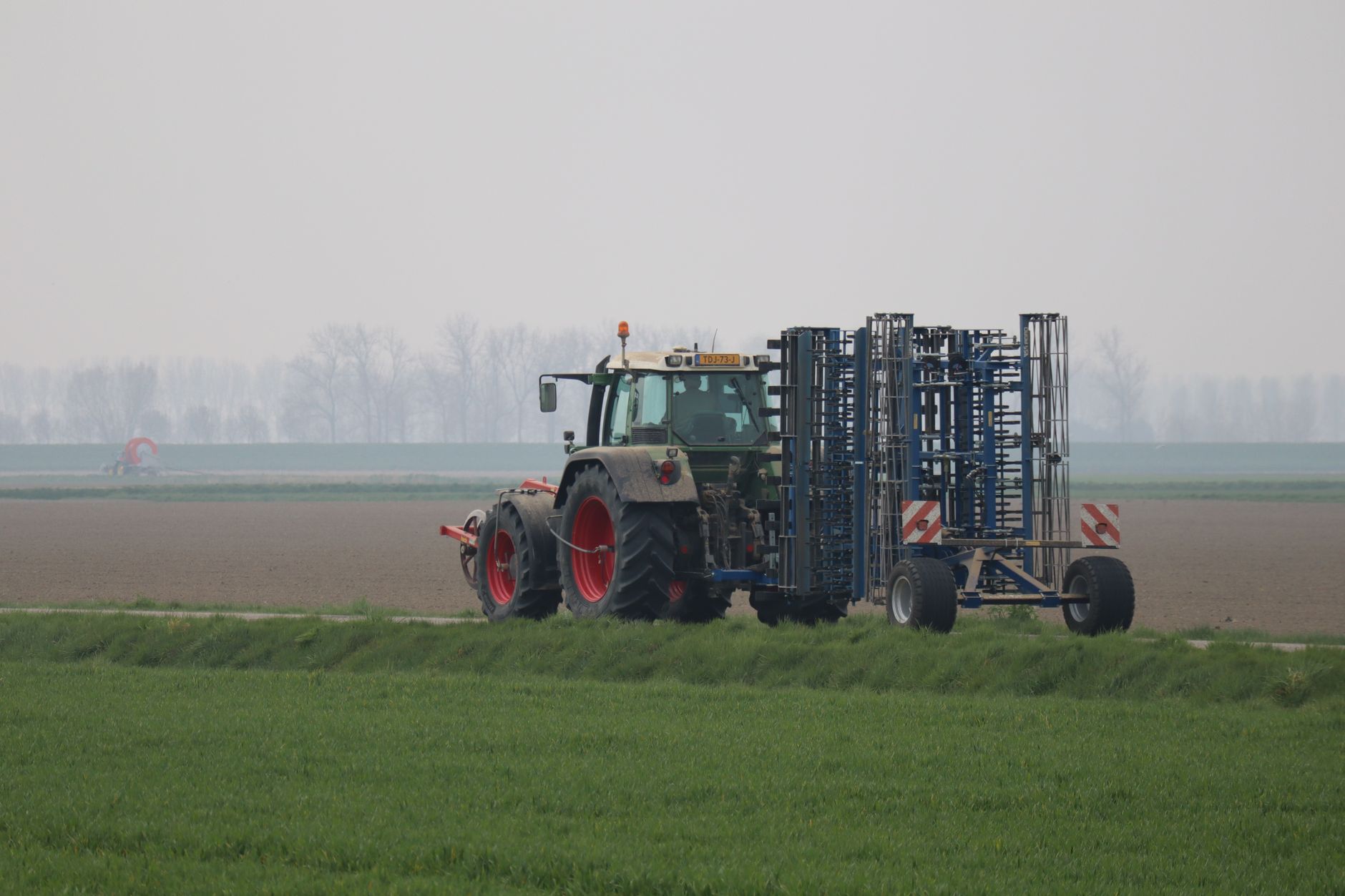
A tractor that won't start is stressful — especially in the middle of the season. But in 80% of cases, the cause is simple. The key is to follow a logical method instead of replacing parts at random.
Two main categories:
The starter doesn't turn at all → electrical problem (causes 1-3)
The starter cranks but the engine won't fire → fuel or combustion problem (causes 4-7)
Cause 1: The battery
This is the #1 cause, by far. Tractor batteries endure extreme vibrations and temperature swings.
Symptoms: starter turns slowly, dashboard goes dark when you turn the key, no reaction at all.
Test: measure terminal voltage — it should be > 12.4 V with engine off. Below 12.0 V, the battery doesn't have enough energy for the starter. Also check the terminals: corrosion (white-green deposits) creates resistance that blocks current.
Fix: clean terminals, recharge or replace. Tractor batteries last 3 to 5 years on average.
Cause 2: The starter motor
If the battery is good (> 12.4 V) but the starter doesn't turn or makes a single "click":
Symptoms: single click at the solenoid, or grinding noise (damaged pinion).
Test: lightly tap the starter with a hammer handle while an assistant turns the key. If it starts, the starter is dying (worn brushes).
Fix: replace or refurbish the starter. Budget: 150-400 euros depending on model.
Cause 3: Safety relays
Modern tractors have multiple safety relays: seat (you must be seated), clutch or brake pedal (must be pressed), PTO (must be disengaged), gear lever (in neutral).
Symptom: nothing happens, no click, no sound.
Test: verify you're properly seated, clutch pressed, PTO disengaged, gear in neutral. Try bypassing the seat switch (temporary jumper) — if it starts, the switch is faulty.
Cause 4: The fuel filter
A clogged fuel filter lets enough diesel through for idle but not for starting. Very common after winter storage or with poor-quality diesel.
Symptoms: starter cranks normally, engine coughs but won't catch. Or it starts then stalls immediately.
Fix: replace the fuel filter and water separator. Bleed the system (manual or electric priming pump). Budget: 15-35 euros per filter.
Cause 5: Glow plugs
Diesel engines need preheating to start cold (below ~10°C). If the glow plug light doesn't come on or stays on for only 1-2 seconds instead of 5-10:
Test: remove a glow plug and test with a multimeter — typical resistance 0.5-2 ohms. If infinite, the plug is blown.
Fix: replace failed glow plugs. Recommended to change all at once. Budget: 15-30 euros per plug, 60-180 euros for a full set.
Cause 6: Fuel injection (injectors or pump)
If the tractor was stored for a long time with diesel in the system, injectors can be fouled or seized. The injection pump can also lose pressure.
Symptoms: black or white smoke on startup, engine running on 3 cylinders instead of 4, misfires.
Test: loosen one injector at a time while the engine runs (caution: high pressure!). The cylinder whose RPM doesn't change when loosened = faulty injector.
Cause 7: Injection timing
Rarer but serious. If the injection pump timing is off (from a botched repair or stretched chain/belt), the engine refuses to start or runs erratically.
Symptom: engine cranks but won't catch, with backfires or abnormal metallic noise.
Fix: timing verification by a professional. Do not adjust injection timing without the proper tools and training.
Try L'Atelier free for 10 days — no credit card required. Describe your tractor's exact behavior and get a step-by-step diagnosis.
On utilise des cookies essentiels au fonctionnement. Avec ton accord, on ajoute la mesure d'audience et l'attribution de nos liens/sondages partenaires (ça finance le service). En savoir plus