
Back
GuideBike

Which mountain bike to choose as a beginner? The 2026 guide

M
Max
6 minApril 8, 2026
Which mountain bike to choose as a beginner? The 2026 guide

Mountain biking is huge: start by defining your riding

Before looking at any bike, ask yourself the real question: where will you ride?

  • Forest trails and casual rides: a basic hardtail is more than enough
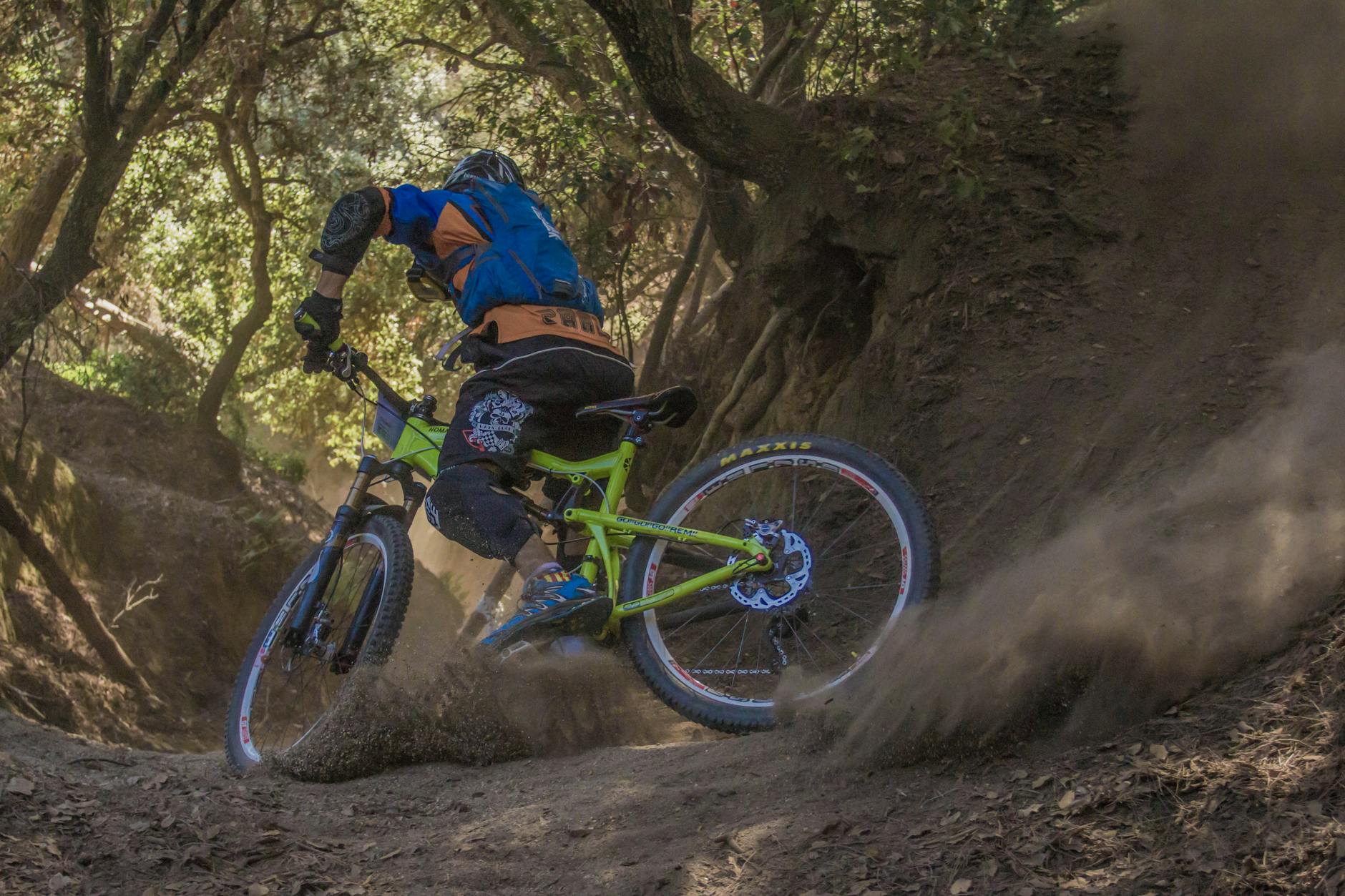
  • Technical trails, roots, rocks: a decent hardtail or entry-level full-suspension
  • Bike parks, jumps, enduro: full-suspension mandatory, with at least 140 mm travel

Most beginners overestimate their need for travel and underestimate the importance of weight and component quality.

Hardtail vs full-suspension

Hardtail

  • Front suspension fork, rigid rear
  • Pros: lighter, cheaper at equivalent spec, less maintenance, better for learning technique (you must read the terrain)
  • Cons: less comfortable and less grippy on very rough terrain
  • Minimum budget for a good hardtail: €600-800

Full-suspension

  • Front and rear suspension
  • Pros: comfort, grip, confidence on technical terrain
  • Cons: heavier, more expensive, rear suspension maintenance (annual service €80-150)
  • Minimum budget for a good full-sus: €1,500-2,000
Simple rule: if your budget is under €1,200, get a hardtail. A full-suspension at €800 will have mediocre components and a rear shock that just bounces without damping anything.

Wheel size: 27.5 vs 29 inches

  • 29 inches: better obstacle rollover, more stable at speed, dominant standard in 2026
  • 27.5 inches: more nimble, more playful, preferred in bike parks and for smaller riders (< 1.65 m)
  • Mullet (29 front / 27.5 rear): trendy compromise, especially in enduro

For a beginner, 29 inches is the default. Unless you're under 1.60 m — then 27.5 will be more proportional.
Try the AI mechanic on your machine

Your exact answer in 10 seconds

Give us your model. We cross-check workshop manuals and answer, sourced.

Our picks by budget

BudgetModelTypeWheelsGroupsetStrength
~€500Decathlon Rockrider ST 540Hardtail27.5"Microshift 9sBest first MTB
~€800Decathlon Rockrider AM 100Hardtail29"Shimano Deore 1x10Suntour air fork
~€1,200Canyon Stoic 2Hardtail29"Shimano Deore 1x12Premium alloy frame
~€2,000Giant Trance 29 3Full-sus29"Shimano Deore 1x12First proper FS
~€2,500Canyon Spectral 29 CF 7Full-sus29"SRAM NX EagleCarbon + 150 mm

What to absolutely avoid

Department store MTBs (Walmart, Amazon no-name). They weigh 16-18 kg, have brakes that don't brake, suspension that doesn't suspend, and derailleurs that go out of tune in 3 rides. A €200 new MTB isn't an MTB — it's a bike shaped like one.

V-brakes on an MTB: in 2026, it's the sign of absolute bottom-tier. Demand disc brakes, at minimum mechanical (hydraulic preferred).

How to choose your size

Frame size depends on your height AND inseam. Each brand has its own sizing, but here's a baseline:

Your heightMTB frame size
1.55-1.65 mS (15-16")
1.65-1.75 mM (17-18")
1.75-1.85 mL (19-20")
1.85-1.95 mXL (21-22")
When in doubt between two sizes, go smaller. An MTB that's too big is far more of a problem than one that's slightly small.

Use L'Atelier to compare geometries and find the exact specs of any MTB — type the brand and model, and the assistant pulls everything up.

Try the AI mechanic on your machine

Your exact answer in 10 seconds

Give us your model. We cross-check workshop manuals and answer, sourced.