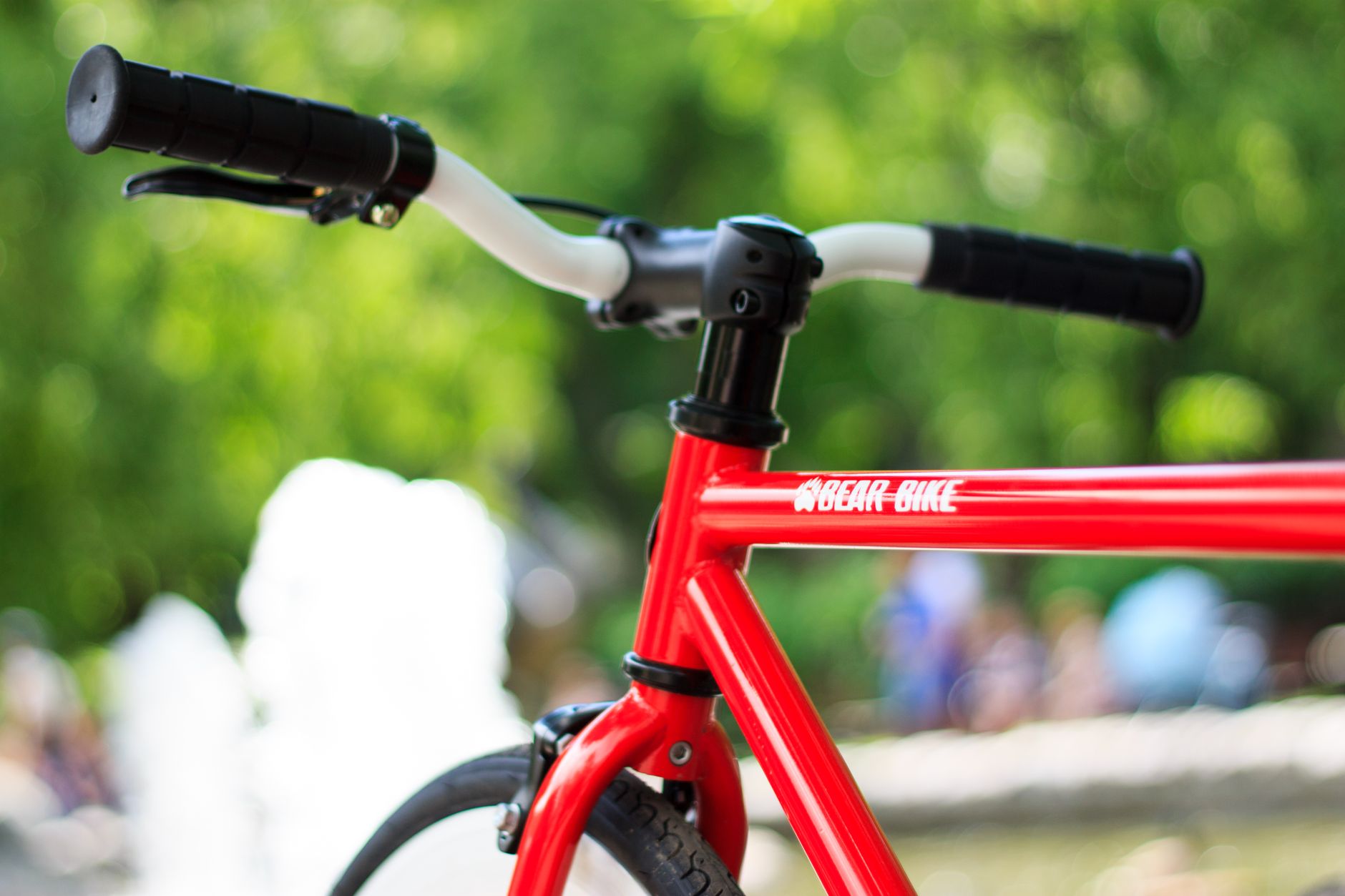
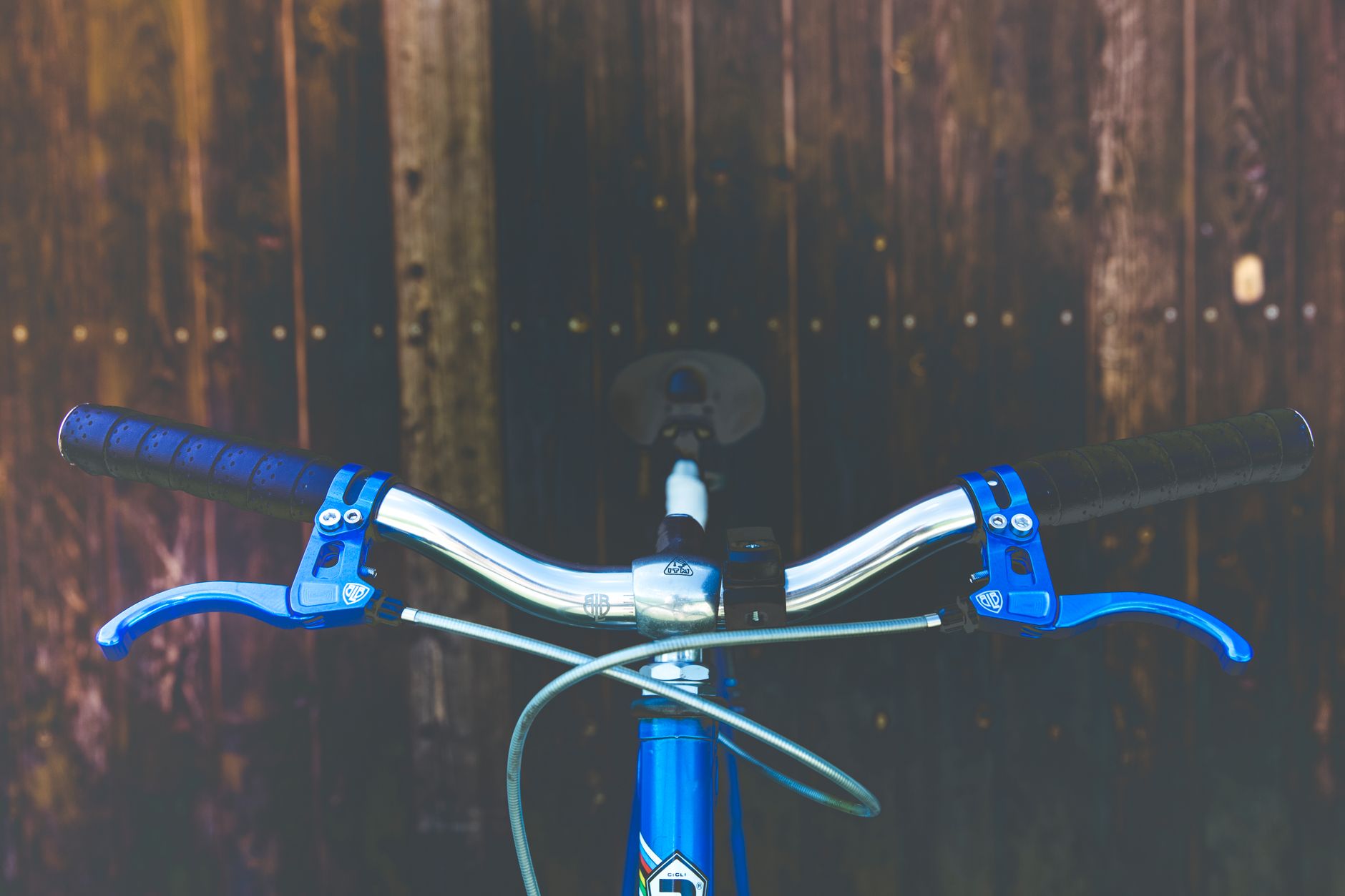
The headset is the set of bearings that allows the steerer tube to rotate freely inside the head tube. When these bearings wear out, three symptoms appear:
Play: squeeze the front brake and push the bike back and forth. If you feel a "clunk" in the headset, there is play. This isn't always the bearing — it can be insufficient top cap preload
Roughness: turn the handlebars slowly while stationary. If you feel notches, resistance, or hard spots, the balls or races are pitted. This is irreversible — replacement is needed
Creaking: a "click" or "crunch" noise when braking or hitting bumps. Can come from dry bearings, a poorly seated cup, or corrosion between parts
Quick test: lift the bike by the top tube. The handlebars should fall on their own by gravity, smoothly and without notching. If they stick or fall in steps, the bearings are done.
The 4 headset standards
1. Threadless (Ahead)
The dominant modern standard (95% of current bikes). The steerer tube extends above the head tube, a clamp-on stem holds everything. Preload adjustment is done via the top cap screwed into a star-nut or compression plug.
2. Integrated
Bearings sit directly inside the frame's head tube, with no external cups. Common standards:
IS41 (41 mm): most common on road bikes, 36°×45° or 45°×45° bearing
IS42 (42 mm): high-end road bikes
IS47 (47 mm): MTB with 1.5" lower steerer
3. Semi-integrated (Zero Stack)
Bearings sit in cups pressed inside the head tube, but the head tube has a slightly larger inner diameter to accommodate them. Standards:
ZS44 (44 mm): most common on MTB and gravel
ZS56 (56 mm): MTB, lower cup for 1.5" steerer
4. Threaded
The vintage standard. The steerer is threaded, an adjusting nut + locknut maintain preload. Found on old bikes, classic city bikes, and some fixed-gear bikes. Standards: JIS (25.4 mm) or ISO (25.4 mm, different thread pitch).
Critical dimensions
Before buying a replacement bearing, you need to know:
Standard: IS (integrated), ZS (semi-integrated), or EC (external cup)
Diameter: 41, 41.8, 44, 47, 49, 52, 56 mm — the cup seat size in the frame
Bearing angle: 36°×45° (standard) or 45°×45° (angular contact, more durable)
Steerer diameter: 1"1/8 (28.6 mm) on top, often 1.5" (38.1 mm) on bottom for MTB (tapered)
The standardized naming system comes from Cane Creek: for example, ZS44/28.6 | ZS56/40 means semi-integrated 44 mm top for 1"1/8 steerer, semi-integrated 56 mm bottom for 1.5" tapered steerer.
Tools needed
Headset press: Park Tool HHP-3 or equivalent. Essential for installing cups without damage. NEVER hammer, even with a wooden block — you risk cracking the frame or installing the cup at an angle
Cup and crown race removers: Park Tool RT-2 (crown race) + HT-2 (cups). A flat screwdriver can work in a pinch but it's risky
Torque wrench: for the top cap (approximately 1-2 Nm, just enough to eliminate play) and stem bolts (5-6 Nm per manufacturer spec)
Grease: lithium or bearing-specific grease on all contact surfaces
Step-by-step replacement
Removal
Remove the top cap (5 mm Allen bolt)
Loosen the stem bolts (2 x 4 mm or 5 mm Allen)
Remove the stem and handlebars (set them aside, no need to disconnect cables)
Remove spacers and the compression ring
Hold the fork from below and lift the frame off the steerer — bearings will come loose
Note the order of all parts (cups, bearings, seals, spacers). Take a photo
Cup extraction
Flip the frame upside down
Insert the remover from the top, position the tangs on the lower cup edge
Tap with a mallet evenly around the perimeter
Repeat for the upper cup
Installation
Clean the inside of the head tube (isopropyl alcohol)
Grease the contact surfaces between cups and frame (prevents galvanic corrosion, especially aluminum/steel)
Align the lower cup in the press. Tighten progressively and evenly — the cup must go in straight, with no angle
Repeat for the upper cup
Install the crown race on the steerer (use a crown race setter, not a hammer)
Grease the bearings and assemble in order: lower bearing → compression ring → fork → upper bearing → spacers → stem → top cap
Preload adjustment
Tighten the top cap to 1-2 Nm — just enough to eliminate play. Over-tightening makes the steering stiff
Align the stem with the wheel
Tighten stem bolts to 5-6 Nm (check manufacturer spec)
Test: front brake squeezed, push the bike back and forth. Zero play. Turn the handlebars — smooth, no notching
Lifespan and prevention
A quality headset (Cane Creek 40, Chris King, Hope) lasts 5,000 to 20,000 km depending on conditions. To maximize lifespan:
Grease the bearings at every overhaul (at least once a year)
Protect the headset from water: a silicone seal under the top cover is good insurance
Avoid pressure washing (water penetrates seals)
Check top cap preload every 3 months
L'Atelier knows the headset standard for most bikes — specify your model to find the exact replacement dimensions.
On utilise des cookies essentiels au fonctionnement. Avec ton accord, on ajoute la mesure d'audience et l'attribution de nos liens/sondages partenaires (ça finance le service). En savoir plus