
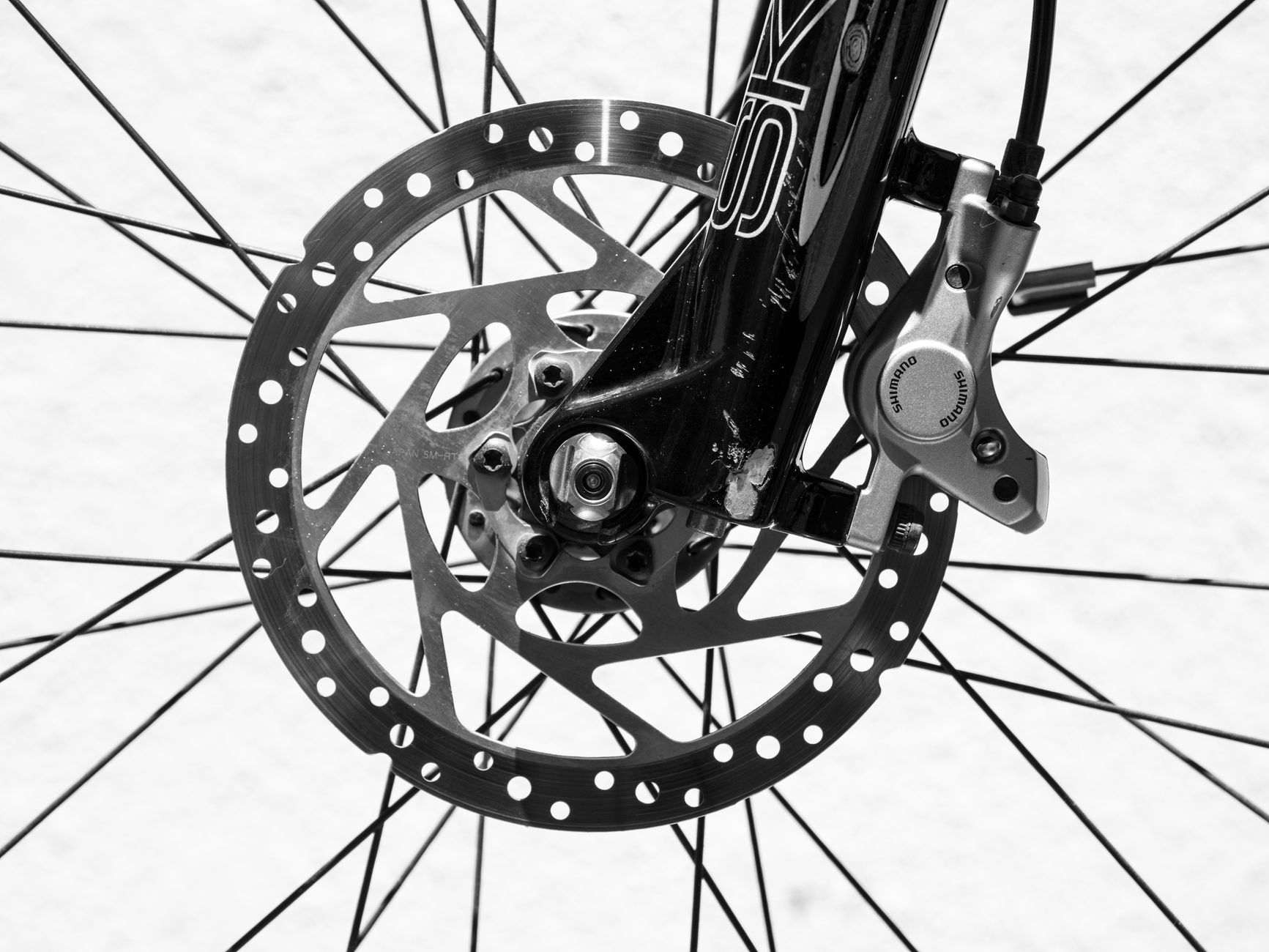
The limit you must not cross
A new disc brake pad has about 3 to 4 mm of compound. The wear limit is 0.5 mm. Below that, you're braking with the metal backing plate directly against the rotor. Result: metallic noise, scored rotor (needs replacing too), and most importantly loss of braking power.
Simple rule: if you see less than 1 mm of compound, it's time to order new pads. At 0.5 mm, you're already at the limit.
The 5 warning signs
You don't always have calipers handy. Here are the unmistakable signs:
1. Metal grinding noise — The most obvious sign. If your brakes sound like metal on metal (not a slight whistle, a real screech), the pads are probably worn down to the backing plate.
2. Longer lever pull — You need to pull the lever further than before to brake. Thinner pads force the pistons to extend more.
3. Reduced braking power — You squeeze just as hard but the bike takes longer to stop. Particularly dangerous on descents.
4. Vibrations or pulsing — A rotor scored by worn pads can warp. You feel vibrations in the lever with every wheel rotation.
5. Visual indicator — Some pads have a wear indicator: a slot that disappears when the compound is too thin, or a different color beneath the surface layer.
Organic vs metallic: which compound to choose?
The two types of compound have very different characteristics:
Organic (resin) pads:
- Smoother, more progressive braking
- Quieter
- Better cold bite (from the very first brake application)
- Wear faster, especially in wet conditions
- Ideal for road, gravel, light XC
Metallic (sintered) pads:
- More powerful and consistent braking
- Better heat resistance (long descents)
- Last much longer
- Noisier, especially in wet conditions
- Wear the rotor slightly faster
- Ideal for enduro, DH, aggressive MTB
If you ride in mixed conditions, semi-metallic pads are a good compromise. But check that your brake manufacturer offers them for your model.


