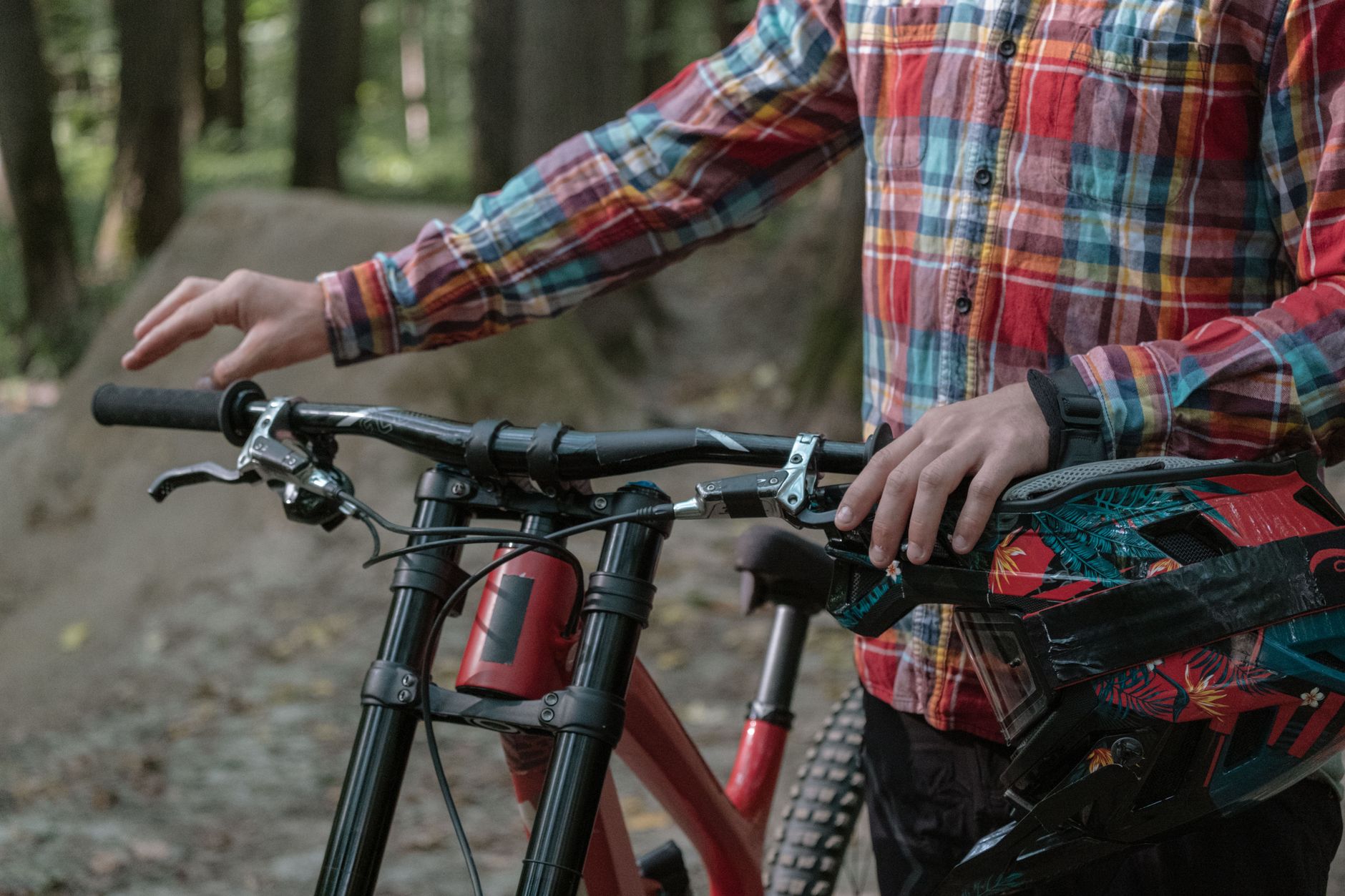
A dropper post lets you raise and lower the saddle while riding, via a remote lever on the handlebar. It revolutionized mountain biking by allowing riders to lower the saddle for technical descents and raise it for climbs — without stopping.
Mechanical principle
Most droppers use a sealed hydraulic (or pneumatic) cartridge. When you press the lever, a valve opens and allows movement. The internal spring (air or mechanical) pushes the post back up when the valve is open and you're not sitting.
The two main technologies:
Sealed hydraulic (RockShox Reverb, Fox Transfer): hydraulic fluid + compressed air in a sealed cartridge. Reliable, but service requires specific tools
Mechanical/air (OneUp V2, Brand-X Ascend, PNW): mechanical spring or compressed air for return, mechanical cable for activation. Simpler to maintain
Available travel
Travel
Typical use
Frame size
100 mm
XC, small frames
S
125 mm
XC/Trail, medium frames
S-M
150 mm
Trail/All-Mountain
M-L
170 mm
Enduro
L-XL
200 mm
Enduro/DH, large frames
XL
When to service?
Regular maintenance is key to longevity. Here are recommended intervals:
After every muddy ride: clean the stanchion (the part that enters the frame) with a damp cloth. Remove dried mud around the seal
Every 50 hours (or every 3-4 months): basic service — upper seal cleaning, stanchion lubrication, cable/hose check
Every 100-200 hours (or once a year): full service — cartridge disassembly, hydraulic fluid and seal replacement, bleed (for hydraulic models)
Basic service: what you can do yourself
1. Stanchion cleaning
The stanchion is the shiny tube (chrome or Kashima/DLC coated) that slides into the seat tube.
Lower the post completely
Wipe the stanchion with a clean cloth dampened with isopropyl alcohol
Apply a thin coat of suspension fluid (RockShox Maxima Plush or Fox Float Fluid) to the stanchion
Cycle the post up and down several times to distribute the lubricant
Wipe off excess
Never use WD-40, degreaser, or chain oil on the stanchion. These products degrade internal seals.
2. Cable check (mechanical models)
Check that the cable slides freely in the housing
Inspect the ends: a frayed cable must be replaced
Check tension: when the lever is at rest, the cable should not be tight enough to hold the valve open
Lubricate the housing with cable lubricant (Shimano SP41 type)
3. Hose check (hydraulic models)
Inspect the hose along its entire length: no kinks, no rubbing against the frame
Check fittings: no visible oil leaks
If the lever feels spongy → there's air in the system → bleed needed
Common issues and diagnosis
Post sinks on its own (sag)
Symptom: you sit down and the post slowly sinks, even without pressing the lever.
Possible causes:
Insufficient air pressure (air models): re-inflate via the Schrader valve at the base. Typical pressure: 150-250 psi depending on model and your weight
Worn hydraulic cartridge: fluid leaks past the internal valve. Full service needed
Worn cartridge seal: cartridge or internal seal replacement needed
Slow or incomplete return
Symptom: when you press the lever and stand up, the post rises slowly or doesn't reach full height.
Possible causes:
Cable too tight (mechanical models): the valve stays partially open. Release tension
Excessive friction: the stanchion is dirty or scratched. Clean and lubricate. If deeply scratched, the stanchion needs replacement
Low air pressure (air models): re-inflate
Cold temperature: in winter, oil thickens and return slows. This is normal. Some manufacturers offer low-viscosity oil for winter
No movement at all
Symptom: the post doesn't move up or down at all.
Possible causes:
Broken or disconnected cable: check the cable from lever to post
Seized cartridge: internal corrosion. Full service required
Faulty lever: test by disconnecting the cable and pulling manually
Lateral play
Symptom: the saddle wobbles side-to-side when you pedal.
Possible causes:
Worn bushings: the plastic/bronze guide bushings are worn. Replacement needed. This is the most expensive fix if you don't do it yourself
Insufficient clamping: check the seat clamp torque (5-7 Nm depending on manufacturer)
Brands and specifics
RockShox Reverb
Type: sealed hydraulic (Connectamajig or Stealth)
Service: full service with the RockShox kit (bleed kit + Maxima oil). The bleed is the most technical part
Weak point: the internal hose can get stuck in the frame. Use cable lubricant when routing
Special tool: IFP wrench (Internal Floating Piston) for full service
Fox Transfer
Type: sealed hydraulic
Service: similar to the Reverb. Fox service kit with Fox Gold 20wt oil
Strong point: Kashima coating on the stanchion = less friction, more durable
Weak point: the remote lever (1x Lever) can come loose. Check torque regularly (2 Nm)
OneUp V2 / V3
Type: mechanical + air
Service: simplest on the market. The cartridge is user-replaceable without special tools. Cable change takes 10 minutes
Strong point: value for money, ease of maintenance, user-replaceable cartridge
Tip: air pressure is adjustable to match return speed to your weight (150-250 psi)
Tools needed for service
Torque wrench (2-7 Nm)
Allen keys 2, 2.5, 3, 4, 5, 6 mm
Snap ring pliers (for some models)
Suspension fluid (Maxima Plush or Fox Float)
Clean cloths + isopropyl alcohol
Bleed kit (hydraulic models only)
Is your dropper showing signs of wear? Describe the symptoms to L'Atelier — it identifies your exact model and guides you through the right diagnosis and repair.
On utilise des cookies essentiels au fonctionnement. Avec ton accord, on ajoute la mesure d'audience et l'attribution de nos liens/sondages partenaires (ça finance le service). En savoir plus