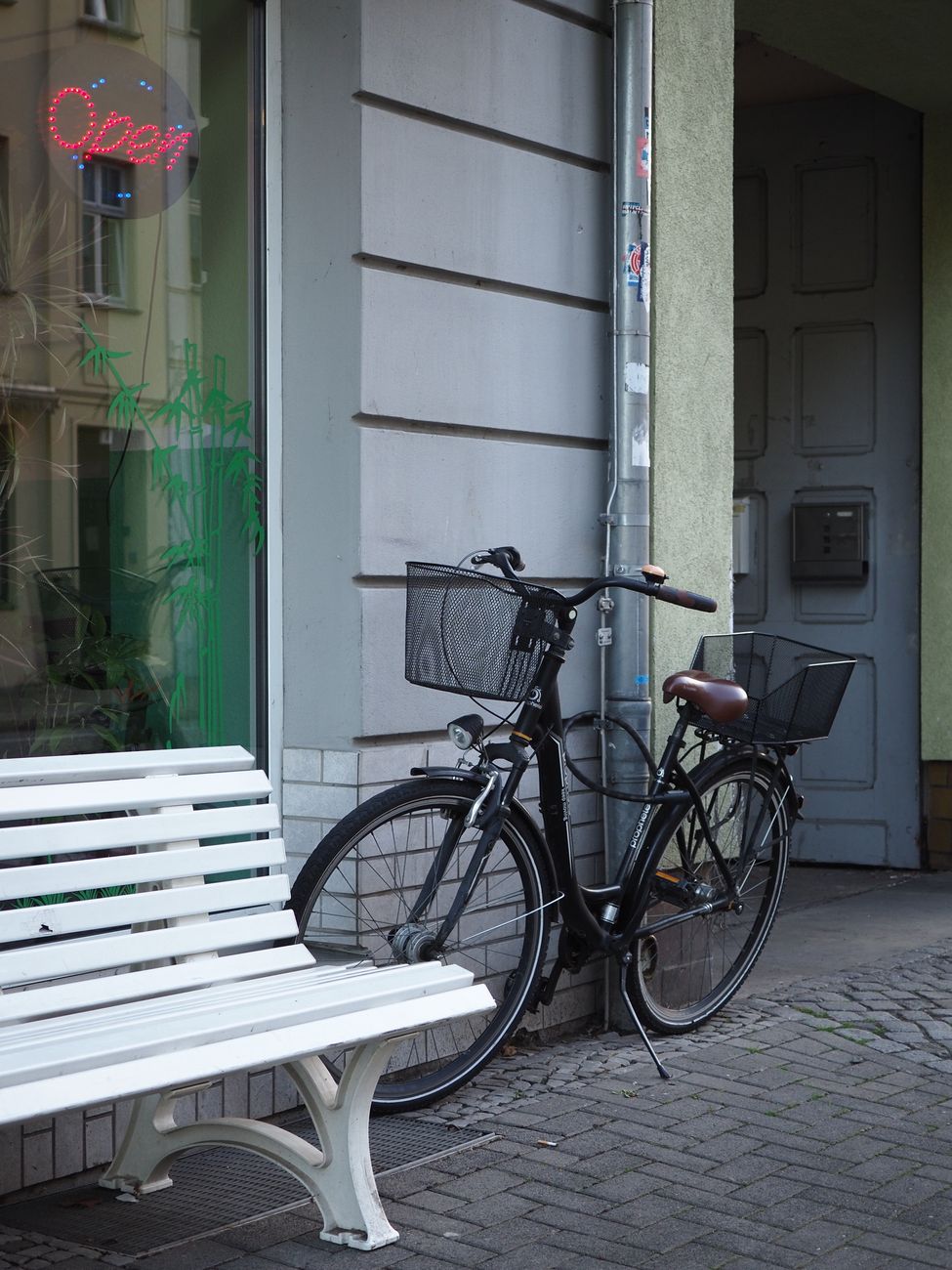
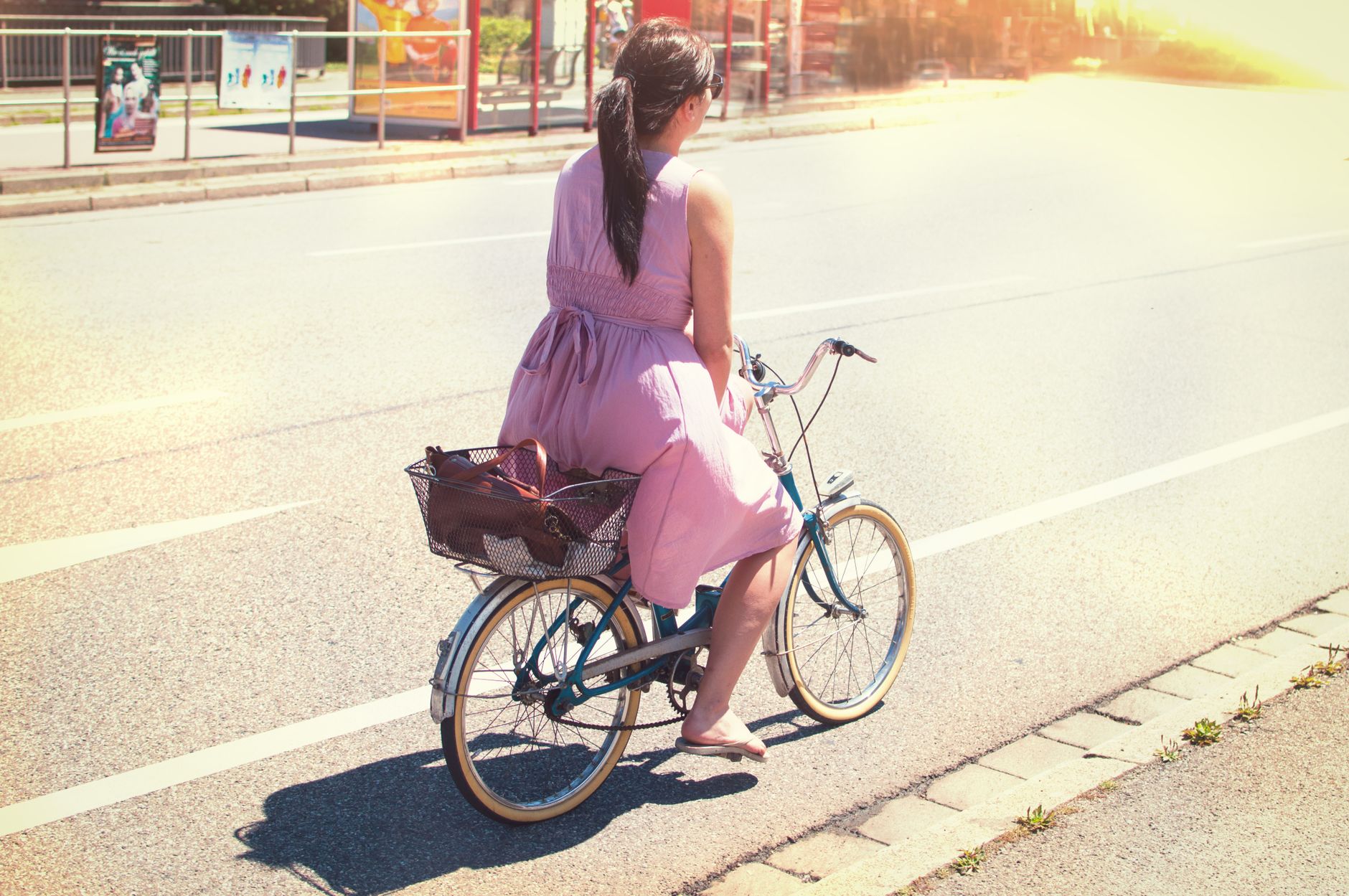
On a city bike you get on and off twenty times a trip: lights, crossings, shopping, school. Each time you have to swing a leg. With a step-through frame you step over from the front without lifting your foot higher than a stair, even with a bag on the rack, a skirt or a child seat. That's why, in the Netherlands, step-through frames are everywhere, whatever the rider's sex.
The old "ladies' bike" label means nothing any more. The real question is mechanical: what do you gain, and what do you lose, by removing the top tube?
Frame shapes, from most closed to most open
| Shape | Description | Standover height | Stiffness |
|---|---|---|---|
| Diamond (high frame) | horizontal or near-horizontal top tube | high | the best, weight for weight |
| Trapeze (semi-low) | top tube sloping down towards the saddle | medium | good |
| Mixte | two thin tubes running from the head tube to the rear dropouts | medium | good, classic on older bikes |
| Swan-neck | curved top tube plunging towards the bottom bracket, like a swan's neck | low | fair, depends on reinforcement |
| Open frame (step-through) | a single large down tube, no top tube | very low | the weakest weight for weight, offset by bigger tubes |
In everyday speech, "low frame", "open frame" and "swan-neck" are often used interchangeably. What counts is the step-over height (the frame's height where you swing your leg through): good manufacturers list it on the spec sheet. Compare it with how high you can lift your leg, in the shop, wearing your usual shoes.
What you lose by opening the frame
Some stiffness
A diamond frame forms two triangles: the stiffest shape you can build from tubes. Remove the top tube and all the load goes through the down tube and its junction with the head tube. As a result, with the same material:
- the frame flexes more when loaded (heavy panniers, child seat) or when you pull on the bars out of the saddle;
- steering can feel vaguer at speed or with a lot of weight at the back: the bike "shimmies";
- stresses concentrate at the head tube / down tube junction.
Manufacturers compensate with an oversized down tube, gussets and sometimes a second tube. On a well-designed city bike ridden at 15-20 km/h you hardly feel it. On a loaded e-bike at 25 km/h you feel it more.
That junction isn't a theoretical weak spot. In August 2025, Cowboy launched a voluntary recall of some Cowboy 4 ST (step-through, "Edition MR" frames): fatigue cracks could appear at the head tube / down tube junction after around 2,500 km according to the maker, with free frame replacement. If you buy a used Cowboy 4 ST, check the serial number on the maker's recall page. Our Cowboy 4 review covers the rest of the bike.
A little weight
To recover lost stiffness you need more material: a step-through usually weighs a few hundred grams more than the diamond version of the same model. On a 17 to 25 kg bike, that's negligible.
Maximum load
Some models state a lower maximum total weight (rider + luggage + bike) for the step-through than for the diamond frame. Read the manual: if you weigh 95 kg and carry a child, the margin can be thin.
What a step-through changes for accessories
This is where the nasty surprises hide:
- Car bike racks: towbar or roof racks with arms often hold the bike by its top tube. With no top tube you need a top tube adapter bar (a false bar linking stem and seatpost), a few tens of euros, or a rack that holds the bike by the wheels.
- Wall hooks or flat stands that sit under the top tube: unusable, you need a wheel hook.
- Child seat: seats mounted on the rack are no problem if the rack is rated for it (load marked on the rack). Seats clamped to the seat tube need a compatible diameter and enough room: check the seat maker's compatibility list.
- D-lock: nothing changes; always lock the frame (down tube or seat tube) to a fixed point. See choosing a bike lock.
- Bottle cage and battery: on many step-through e-bikes the battery sits in the down tube. Check it comes out easily without removing the bottle cage.
What you gain
- Everyday safety: less risk of falling when stopped, at the lights, with a loaded rear. With a child seat it's a real argument: no more swinging a leg over the little one's head.
- Accessibility: painful knee or hip, short stature, age, long clothes.
- Riding comfort: the position is generally more upright on a step-through, which suits town riding (you see and are seen).