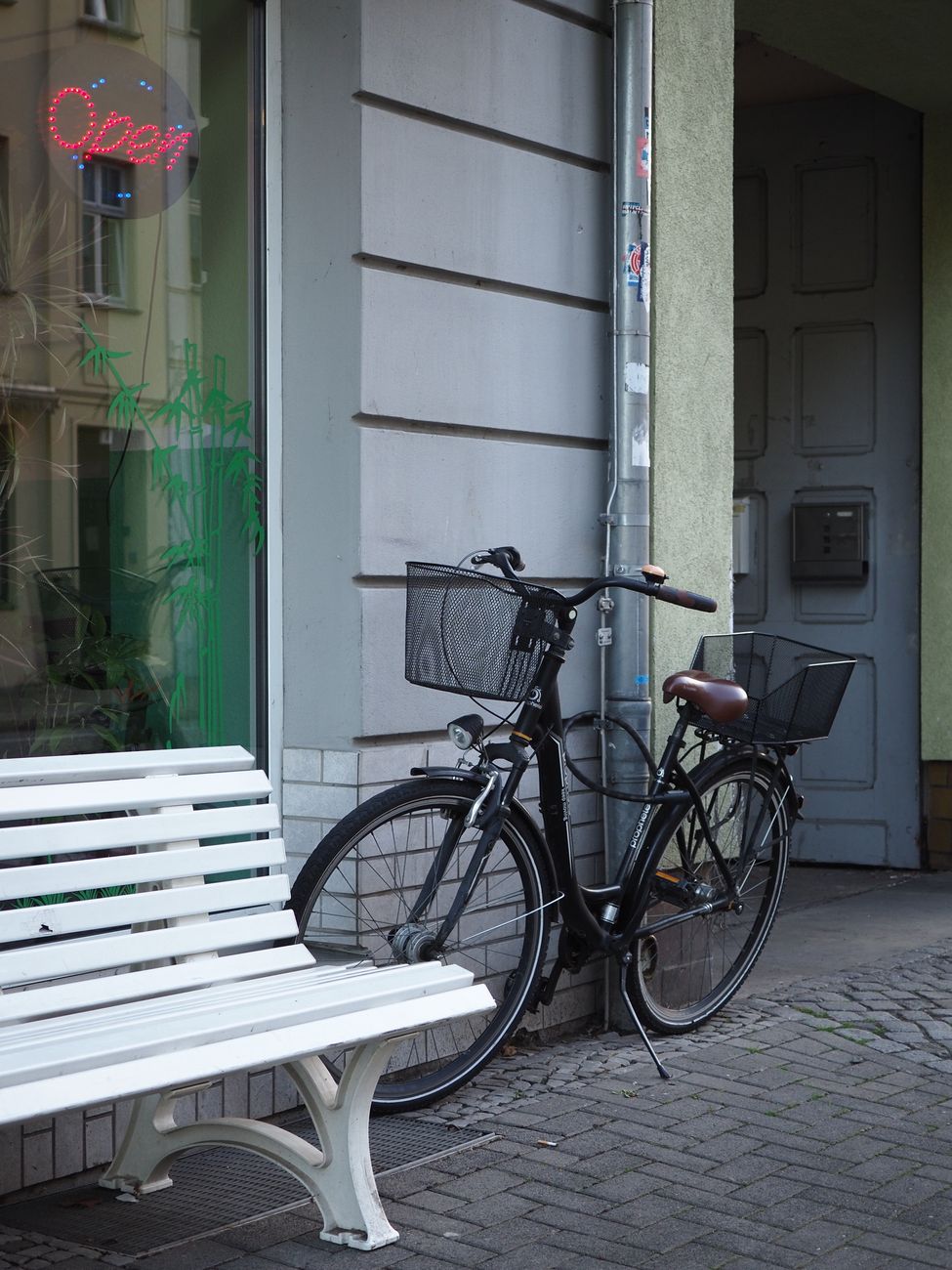
With 500 € in your pocket, you can have a city bike that will be ridden every day for years. You can't have a light, electric or high-end bike. The hard part isn't finding a bike at that price (they're everywhere), it's avoiding those not built for town, and those whose parts give up after the first winter.
Prices below are public prices from brands and their dealers in France between 2023 and 2026: sports chains change prices and promotions constantly, and UK prices differ. Treat them as benchmarks and check on the day.
What to expect under 500 €
At this price almost every new bike shares the same recipe:
- a steel frame (heavier than aluminium, but strong and repairable);
- V-brakes on the rims: effective in the dry, less so in the rain, but simple to adjust and maintain;
- an entry-level 6 or 7-speed derailleur, or a 3-speed hub;
- a weight of 15 to 20 kg.
What not to accept, even at 200 €: a bike without mudguards, without fixed lighting and without a rack. Adding those three later easily costs 80 to 150 € in parts, and the bike is never as well equipped as if it had been designed with them.
The models that hold up
| Model | Type | Gears | Equipment | Weight | Price seen |
|---|---|---|---|---|---|
| Nakamura City 70 (Intersport France) | steel, step-through | 3-speed hub | lights, mudguards, rack | n/a | around 170 to 200 € |
| Decathlon Elops 120 | steel, high or low frame | 6 (derailleur) | dynamo, mudguards, 27 kg rack | 17.5 kg | 249 € (high) / 299 € (low) |
| Decathlon Elops 520 | steel, high or low frame | 6 (derailleur) | dynamo, mudguards, front basket, rack, kickstand | 19 kg | 349 € (recommended price) |
| Decathlon Elops 540 | steel, high or low frame | 7-speed hub | hub dynamo, full chain case, basket, rack | about 20 kg | 449 € (seen in 2023, to check) |
| Decathlon Elops 500 Long Distance | aluminium | derailleur | full city kit | n/a | around 449 € |
| Decathlon Riverside 120 | aluminium hybrid | 8 (derailleur) | none: to be equipped | 14.7 kg | 229 to 259 € |
"n/a": not stated in the sources consulted.
The entry price: Elops 120 or City 70
The station bike, the one you leave outside without worrying. The Elops 120 has the advantage of a dynamo (no batteries to change, no light to steal) and a rack rated for 27 kg. The Nakamura City 70 relies on a 3-speed hub: less adjustment than a derailleur, but only three gears, fine in a flat town and tight on hills.
The sweet spot: Elops 520 or 540
For 350 to 450 € you gain the kit that makes the daily difference: basket, kickstand, and on the Elops 540 a 7-speed hub with a full chain case. A hub gear shifts while stopped (handy at lights), doesn't mind mud and needs very little maintenance. The chain case protects the chain and your trousers. In our view, the best spend under 500 € for daily use.
The bare hybrid
The Riverside 120 is lighter (14.7 kg) and faster, but sold without mudguards, lights or rack. Once equipped, it often goes beyond 350 €. It makes sense if you ride long distances unassisted and are happy to kit it out yourself. The two families are compared in Dutch bike vs hybrid.
What not to buy
- The 150 € supermarket mountain bike: knobbly tyres that drag on tarmac, a heavy suspension fork that's useless in town, brakes and gears out of adjustment within weeks. Less efficient than a 250 € city bike.
- The 500 € e-bike on a marketplace: at that price the battery, charger and controller are bare minimum, often without serious certification, and after-sales is non-existent. The traps are listed in cheap e-bikes on Amazon. If you want electric, aim for at least 1,000 to 1,500 € new (see Chinese e-bikes vs Decathlon) or go second-hand.
- The wrong size because it was on offer: a badly sized frame hurts knees and back. Sizes are in choosing your bike size.
Second-hand: better equipped for the same money
For 300 to 500 €, second-hand opens bikes you won't find new at that price: Dutch bikes with 7 or 8-speed hubs, well-equipped aluminium hybrids, sometimes branded bikes with disc brakes. Three channels:
- Community bike workshops and bike sales: serviced bikes, moderate prices, advice on the spot. The safest route for a first purchase.
- Bike shops selling serviced second-hand: a bit dearer, but with a warranty.
- Private ads: the best prices, and the only real risks (stolen bike, hidden wear).
In France, a used bike sold by a professional must be marked (engraved ID or secure label, registered in a national file). In the UK there's no such obligation, but registering with BikeRegister is common: a seller who can show neither a receipt nor a registration should set alarm bells ringing. Checks are listed in buying a used bike, and the most common scams in used bike scams.
To know whether an asking price is fair, the bike price guide gives an estimate from make, model, year and condition.