
Flat tire: the repair every cyclist must master
Flats happen to everyone. Even with puncture-resistant tires, even with tubeless. The good news: with the right gear and technique, you can be rolling again in 5 to 10 minutes. Here's how.
What to always carry
| Item | Weight | Price | Why |
|---|---|---|---|
| Spare inner tube | 90-120 g | $5-9 | Faster than patching roadside |
| Tire levers (x2) | 20 g | $3-5 | Essential — fingers don't always cut it |
| Mini pump or CO2 cartridge | 80-120 g | $22-44 | To reinflate after repair |
| Patch kit | 30 g | $3-5 | Backup if you've already used your spare tube |
| Tubeless plugs (if tubeless) | 15 g | $9-17 | To seal holes without removing the tire |
CO2 vs mini pump: CO2 inflates in 10 seconds (convenient), but you only get one shot per cartridge. Mini pump is unlimited but takes 5 minutes of pumping. Our advice: bring both.
Method 1: tube change (most common)
Step 1 — Remove the wheel
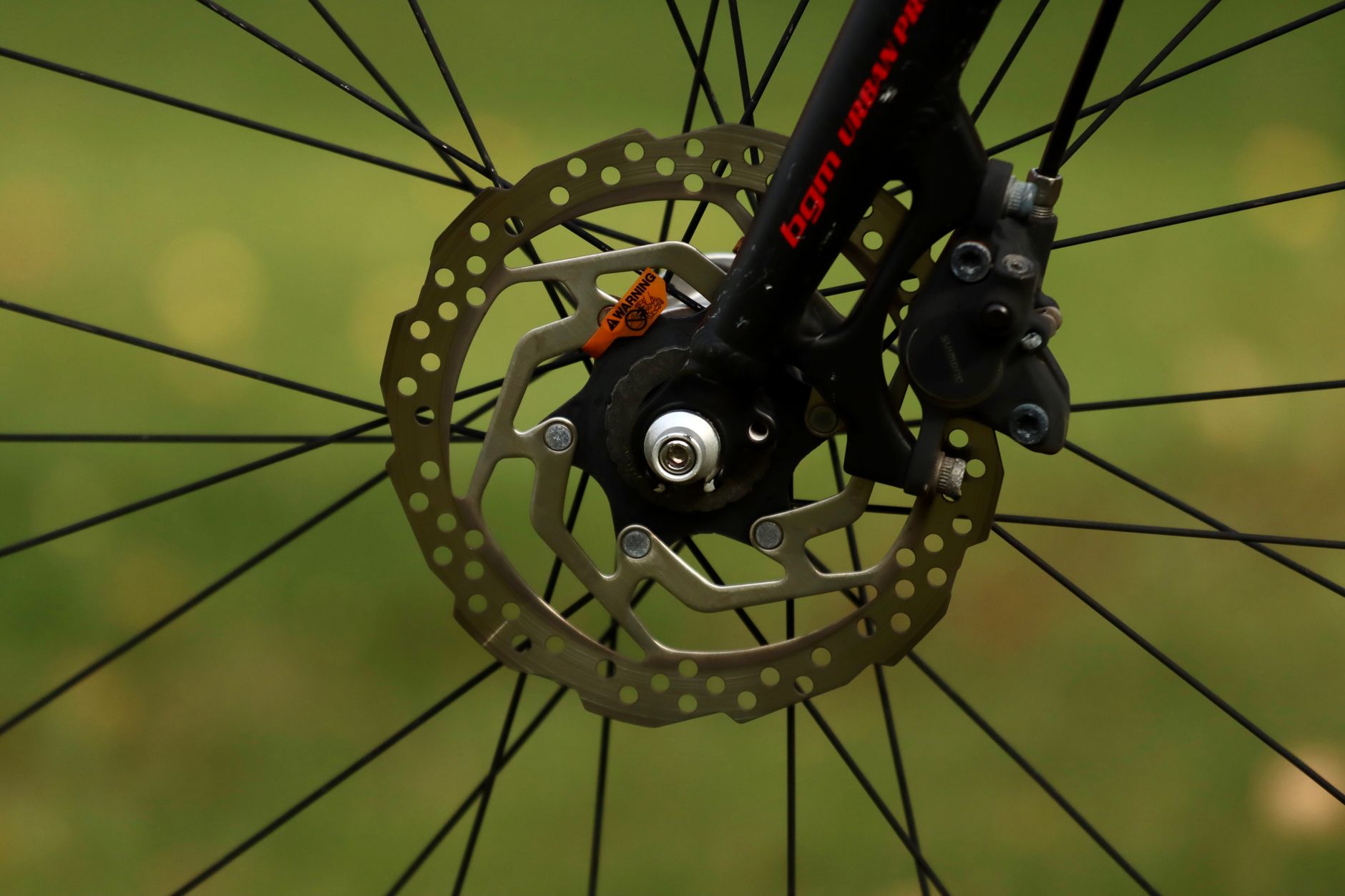
- Rear wheel: shift to smallest cog, open quick release (or unscrew thru-axle), lift derailleur, remove wheel.
- Front wheel: open quick release, remove wheel.
Step 2 — Remove the tire
- Fully deflate the tube (press the valve)
- Insert a tire lever under the tire bead, opposite the valve
- Hook it to a spoke
- Insert the second lever 10 cm away and slide it along the rim
- One side of the tire pops off — only remove one side
Step 3 — Inspect
Before installing the new tube, run your hand inside the tire to find what caused the flat (thorn, glass, wire). If you don't remove it, you'll flat again immediately.
Step 4 — Install the new tube
- Slightly inflate the new tube (just enough to give it shape)
- Insert the valve into the rim hole
- Tuck the tube under the tire all around, being careful not to pinch it
- Push the tire bead back on by hand (no tire levers for remounting — pinch risk!)
- Check that the tube isn't poking out anywhere
Step 5 — Inflate
- Road: 6-8 bar (85-115 PSI)
- Gravel: 3-5 bar (40-70 PSI)
- MTB: 1.5-2.5 bar (20-35 PSI)