The same bike at 12 °C and at -5 °C does not behave in the same way. The rear derailleur refuses to drop onto the big sprockets, the freehub makes a soft rattling noise and sometimes lets go under load, the brake lever is hard for the first three pulls, and if you are on an e-bike the range on the display is a polite lie. None of that is a breakdown: they are components working outside their comfortable temperature range.
There is nothing mysterious about any of it. It is viscosity, a bit of thermodynamics, and the chemistry of road salt. Here is what changes item by item, in the order you will feel it over the first ten kilometres, and what to adapt so you do not spend the winter repairing things.
What the cold changes, item by item
| Item | What happens at -5 °C | What you feel |
|---|---|---|
| Bearing greases | Viscosity multiplied by 5 to 10 | Bike feels "heavy", lazy freehub |
| Cables and outers | Water inside, frozen | Derailleur jammed, cable that will not return |
| Tyres | Loss of 0.2 to 0.6 bar depending on pressure | Vague feel, risk of pinch flats |
| Tyre rubber | Non-winter compounds harden | Grip drops, especially on paint and drain covers |
| Hydraulic brakes | Thicker fluid, pistons slow to retract | Hard lever, pads rubbing |
| E-bike battery | Chemistry slowed, internal resistance up | 20 to 40% less range |
| Steel and aluminium | Salt plus damp equals accelerated corrosion | Visible rust within a few rides |
Stiffened grease: the freehub that slips
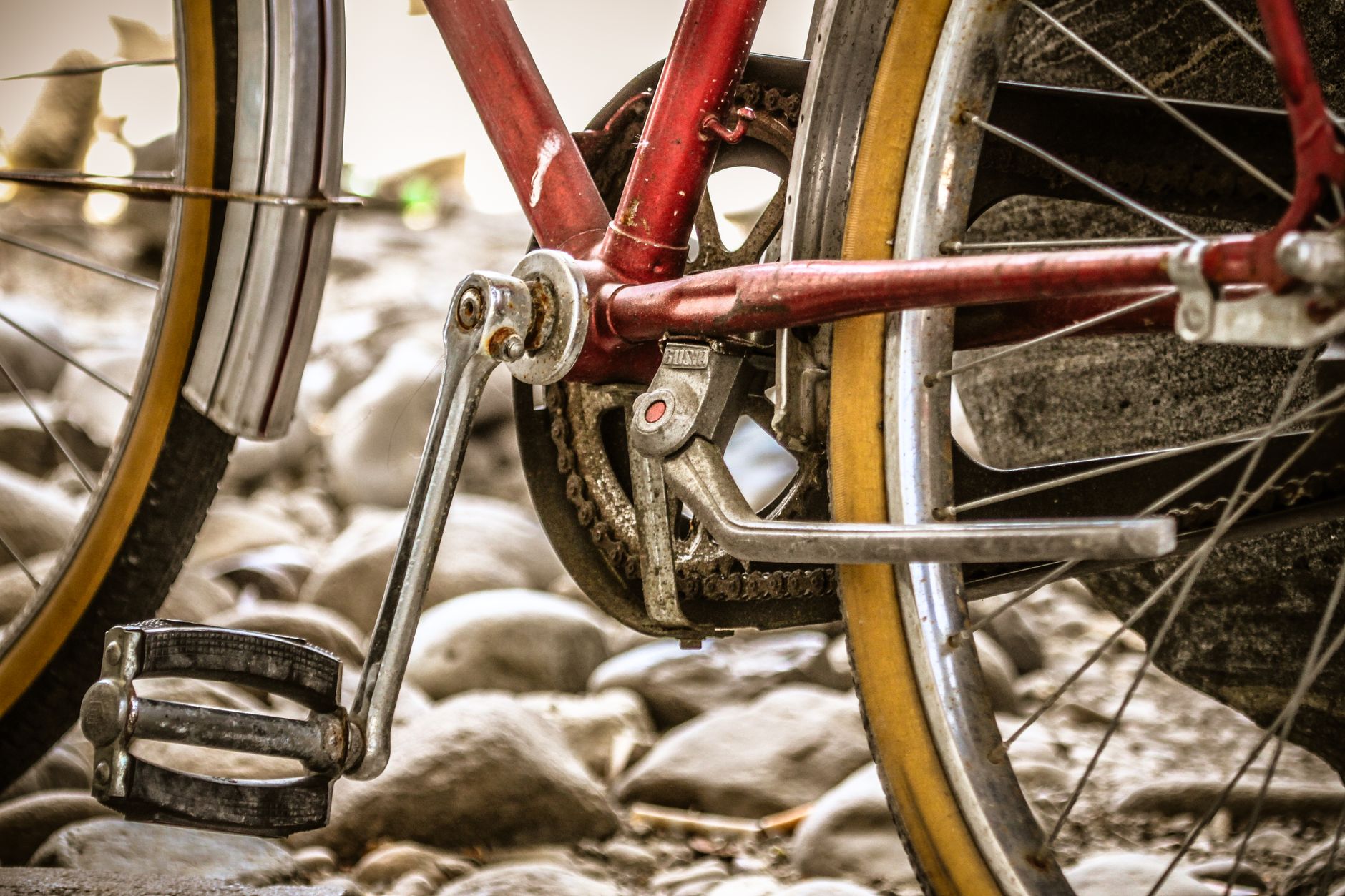
This is the signature hard-frost failure, and it is frightening because it happens out of the saddle: you push, the pedal drops away into nothing, and you land on the frame. The culprit is the freehub body in the rear hub. The pawls are held out by small springs, and if the grease around them is too thick when cold, it stops them lifting fast enough to engage. The mechanism clicks, but no longer drives.
- The real cause is almost always grease that is too heavy: either a thick assembly grease put there for convenience, or old grease emulsified with water after months of rain.
- Correct practice depends on who made the hub. Some specify a thin oil in the freehub body, others a very fluid dedicated grease. Do not decide by feel: this is one of the rare places where "a good dollop of grease" makes things worse.
- The other greases stiffen too, but without dramatic consequences: headset, wheel bearings, dropper post whose return speed collapses. A bike that seems to be braking on its own for the first two kilometres is exactly that.
Cables and outers: water freezing inside
A derailleur that will not drop at -5 °C when it worked the day before is not an adjustment problem. It is water that got into the outer in the autumn and froze overnight. The inner cable is locked in a plug of ice and the derailleur spring no longer has the force to pull it back.
The fix is upstream, not at the roadside:
- Continuous, sealed outers on exposed runs, with ferrules and seals, rather than open sections that act as funnels.
- Replacement in autumn rather than in spring. A set of cables and outers costs £18 to £35 and takes an hour to fit; it is the most profitable job on the bike before winter.
- Cable-operated rear brake: same mechanism, with a genuine risk attached. If the cable stays stuck in the pulled position, you set off with a brake that is dragging.
- A bike brought into a heated room in the evening dries its outers out and the problem disappears. A bike that sleeps outside under a cover accumulates it.
Tyres: you really are losing pressure
It is not an impression. Tyre pressure follows the absolute temperature of the gas. Between inflating in a warm garage at 18 °C and riding out at -5 °C, you lose around 7% of the absolute pressure. In practice:
- a road tyre at 6.5 bar drops to about 5.9 bar;
- a mountain bike tyre at 2.2 bar drops to about 1.95 bar;
- a cargo e-bike tyre inflated to 4 bar goes down to about 3.6 bar.
On high-volume tyres that loss is rather good news for grip. On a narrow tubeless tyre it takes you dangerously close to the point where the bead unseats. The habit to build: check pressure outside, cold, and not as you wheel the bike out of the garage. And accept running 0.3 to 0.5 bar below your summer pressure on cold wet roads, to grow the contact patch. Compound choice matters at least as much as pressure, and it is covered in our comparison of bike tyres in cold weather.