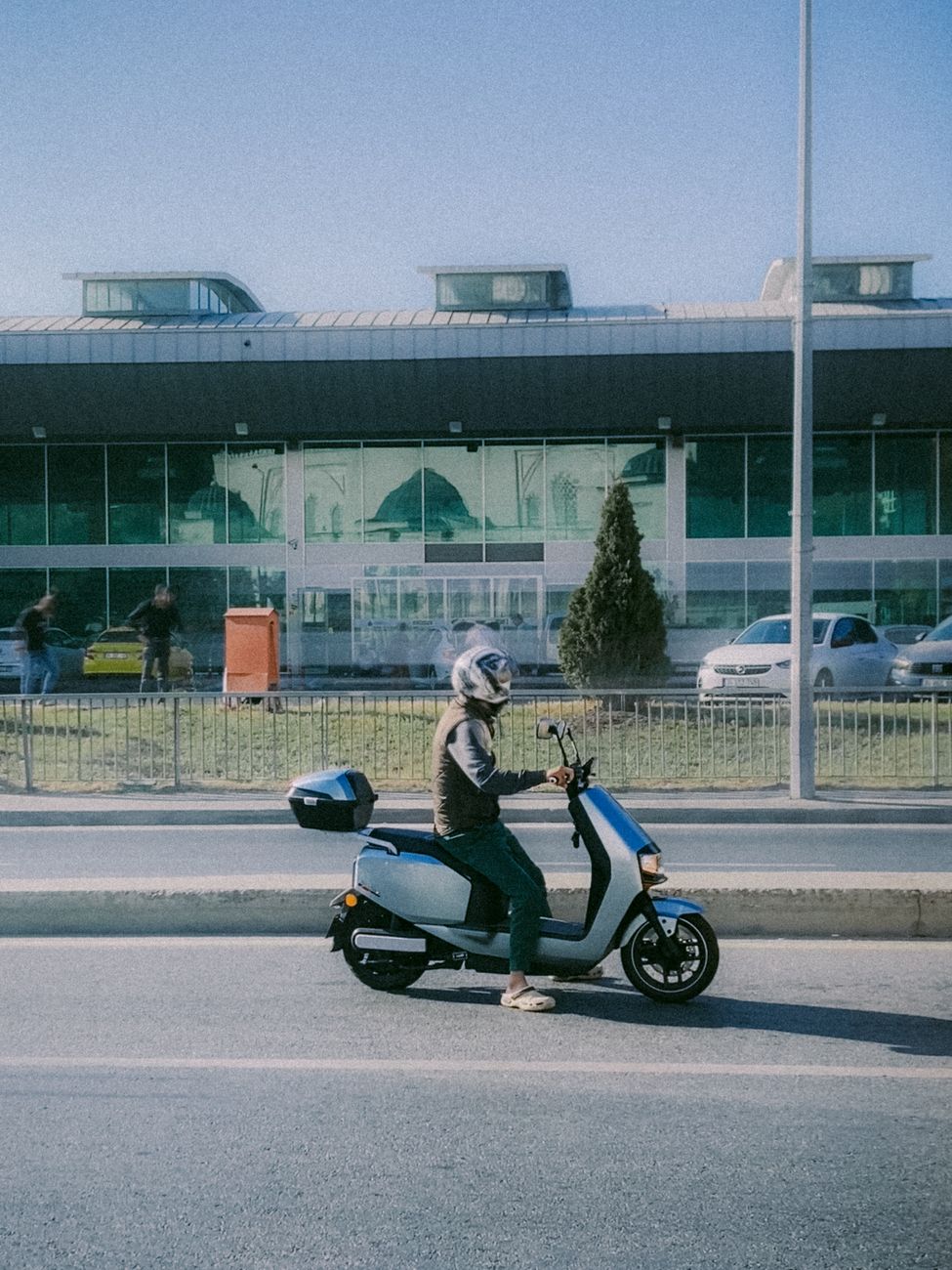
Super Soco, the electric motorcycle and scooter brand of China's Vmoto Soco, has its own way of reporting a fault: the dash shows "Error" followed by a two-digit number, and those numbers count down from 99. The highest concern the controller, the next ones the battery, the lowest connectivity. The table we use here comes from the official TC Max user manual; the TS manual gives the same definitions for the codes it lists. For the CUx and CPx, we found no published table: the principle is the same, but check your manual.
The full table, from 99 to 86
| Code | Meaning (Super Soco manual) | Likely cause | What to do |
|---|---|---|---|
| 99 | Controller communication error | Controller-dash link, connector | Dealer |
| 98 | Controller stopped working | Overcurrent, motor blocked, under-voltage or overheating | Stop, wait, restart; dealer if it comes back |
| 97 | Controller power transistor error | Damaged controller | Dealer |
| 96 | Hall sensor error | Motor Hall sensors, connector | Dealer |
| 95 | Hall sensor error (the manual points to the throttle plug) | Throttle grip, its plug | Check the throttle plug |
| 94 | Battery communication error | Battery plug not fully home or corroded | Check the battery plug |
| 93 | Charging overcurrent | Charger | Stop charging, check the charger |
| 92 | Charging overvoltage | Charger | Stop charging, check the charger |
| 91 | Battery over-temperature | Heavy load, heat | Stop riding or charging, wait |
| 90 | Discharge overcurrent | Excessive load, fault | Stop riding if the code persists; dealer |
| 89 | Charging at low temperature | Battery too cold to charge | Bring the vehicle somewhere warm and wait |
| 88 | Discharging at low temperature | Battery too cold to ride | Bring it somewhere warm and wait |
| 87 | Network connection error | Mobile coverage | Move into the open, wait |
| 86 | GPS connection error | Satellite reception | Move into the open, wait |
One detail of the manual is worth pointing out: codes 96 and 95 carry the same label ("controller hall sensor error"), but the fix given for 95 is to check the throttle plug. The throttle grip also uses a Hall sensor: it is very probably what 95 refers to, whereas 96 refers to the motor. So on a 95, start with the grip.
Reading the table in three blocks
- 99 to 95: the controller and its surroundings. Except 98 (protection, often temporary) and 95 (throttle plug), these are workshop repairs.
- 94 to 88: the battery and charging. Half of these codes are protections: heat, cold, charger. They clear once the cause is gone.
- 87 and 86: connectivity. They concern the app and GPS tracking, not the drive.
98, the most common
98 means the controller has put itself into safe mode. The manual lists four reasons: overcurrent, motor blocked, under-voltage, overheating. In practice it happens after a long loaded climb, a hill start at full throttle, or with an almost-empty battery. Stop, switch off, rest a few minutes, restart. If 98 comes back cold, on the flat, with a charged battery, it is no longer a protection: it is a fault to have diagnosed.
Winter: 88 and 89 are not faults
Lithium batteries dislike the cold, especially when charging. The manual is clear: on an 88 or 89, you bring the vehicle somewhere warm and wait. Charging a frozen lithium battery damages it; the BMS therefore refuses to charge, and that is a good thing. If you park outside in winter, the removable battery on models that have one gets charged indoors, at room temperature.
The manual also covers the battery beyond codes
The TC Max manual's battery troubleshooting section lists a few code-free situations worth knowing:
- Range dropping overnight: the ECU, controller and alarm draw a little current all the time. That is normal, but a bike stored for weeks must be kept charged.
- Battery stored too long that will not wake up: deep discharge, one for the dealer.
- Charger hot while charging: normal, its metal case dissipates the heat.
- Battery that has taken in water (fording, bike down in the rain) or cracked case after an impact: stop using it and have it checked.